Skip to content
Search
Menu

We earn a commission if you book through this link. You pay the same price.

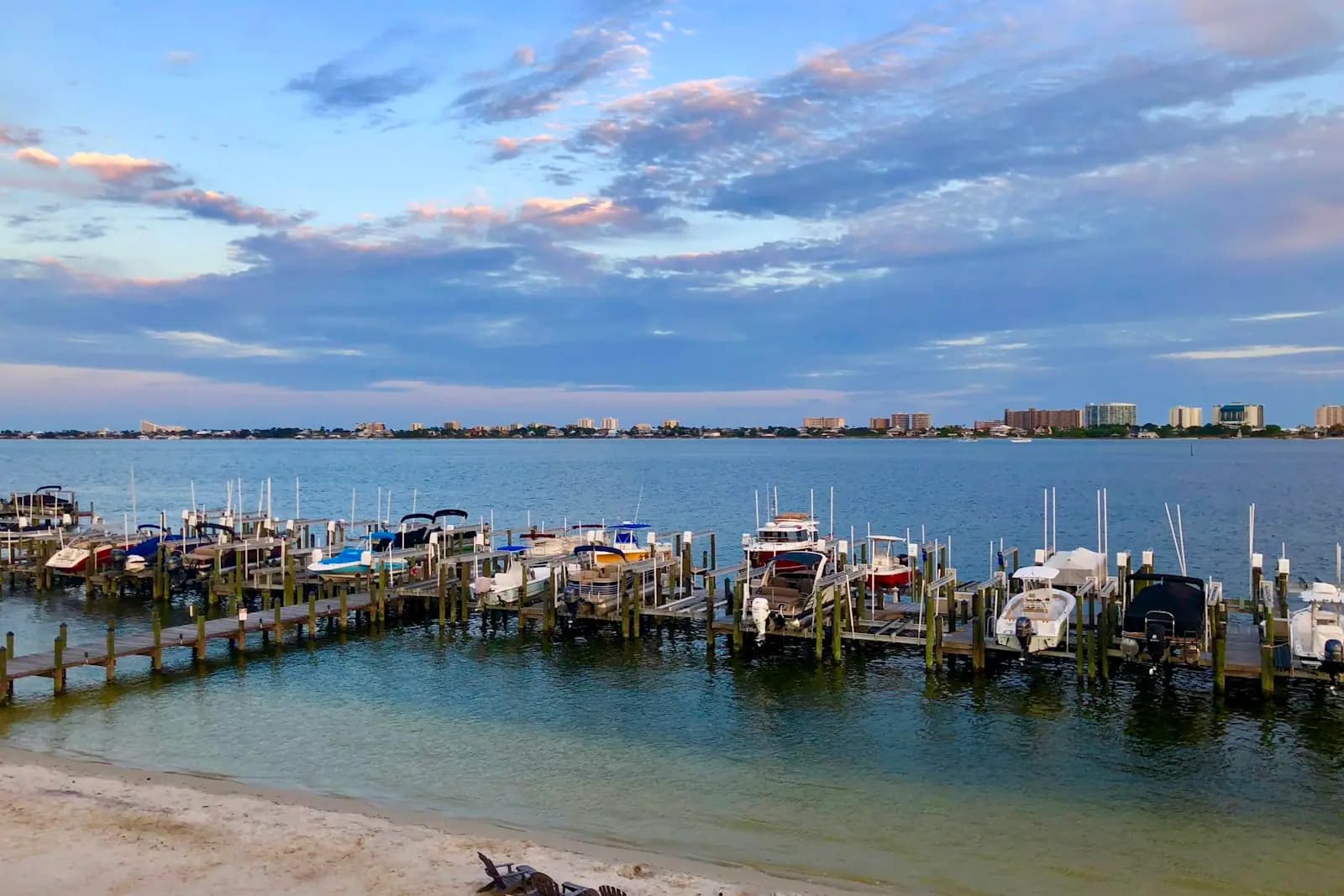
Small boats moored along finger docks in a shallow bay basin with a low shoreline beyond at dusk
Unsplash

Tours

Fishing Charters in Biloxi: Inshore First

Last updated

How fishing works out of Biloxi: speckled trout and redfish in the Sound, the long run offshore, what a charter costs and the licence rules that catch people.

Most visitors ask for a deep-sea charter and most visitors would have a better day if they did not. That is the single most useful sentence on this page, and the reason for it is a map.

Biloxi sits on a peninsula behind the Mississippi Sound, a shallow lagoon roughly twenty feet deep across much of its width, closed in by barrier islands ten to twelve miles offshore. Beyond the islands the bottom keeps sloping gently for a long way. Genuinely deep water, the kind that holds the species people mean when they say deep sea, is much further out from here than it is from the Florida panhandle, where the shelf drops away close inshore. A full offshore day out of a Harrison County harbour is therefore a long run on a lot of fuel, and the boats that do it price accordingly.

What sits between you and that long run is one of the more productive estuaries on the northern Gulf. Speckled trout, redfish, flounder, black drum and sheepshead live in the Sound, the Back Bay, the marsh drains behind Deer Island and around every piece of structure in Biloxi Bay: the highway bridge pilings, the old railroad trestle, the rock of the harbour walls. An inshore half day gets you onto that with a guide who knows which drain is working on which tide, and it costs a fraction of the offshore number.

There is a second story a visitor should know, because every captain here will mention it. In 2019 the Bonnet Carre Spillway upriver was opened twice in one year, which pushed months of Mississippi River fresh water into the Sound. The oyster reefs that fed the system died. Trout moved. The fishery has come back unevenly and the men and women who fish it commercially are still describing the coast in terms of before and after. Ask about it on the boat. You will get a better answer than any website can give you.

Biloxi has almost no charter inventory sold through the big booking platforms, so this page does not pretend otherwise. You book here the way people here book: by calling the dock.

Why a deep-sea day costs more from here

What it costs

The Mississippi coast is not a poor fishing destination. It is a long way from deep water, which is a different problem.

A charter's price is mostly time and diesel. Off the Florida panhandle a boat can be over a hundred feet of water inside an hour, which is why the four-hour deep-sea trip exists there as a product. From a Harrison County harbour, the first ten to twelve miles get you only as far as the barrier islands, and the water out there is still shallow. Everything that makes an offshore day worth doing is further, which turns it into a ten to twelve hour commitment before anyone has put a bait in the water.

That changes the arithmetic for a visitor. A full offshore day here is a serious purchase and it makes sense for a group of four to six anglers who specifically want reef fish and have a whole day to give it. For a family with children, for a couple with a morning free, or for anybody who has never fished salt water before, it is the wrong product at three times the price.

Two smaller costs worth checking before you book anything. Ask whether the fee covers bait, ice, rods and the licence position for passengers, because the practice varies from dock to dock. And ask about cleaning: most captains will fillet your catch, some charge for it, and nobody does it for free on a twelve-hour day when they have to wash the boat down afterwards.

What the fresh water did, and where the fishing is now

The Bonnet Carre Spillway is a flood-control structure above New Orleans that diverts Mississippi River water away from the city when the river runs high. That water ends up in Lake Pontchartrain and then, through the passes, in the Mississippi Sound.

In 2019 it was opened twice in a single year, which had never happened before: once in late February for around six weeks and again from the middle of May for eleven. The Sound is an estuary that depends on a balance between river water and Gulf water, and months of one side of that balance is not something an oyster can wait out. The harvestable reefs died. Shrimp left. Speckled trout, which tolerate a wide salinity range but not that, redistributed toward the islands and the passes where the water stayed salty.

The recovery has been partial and uneven rather than complete, and oyster restoration in particular is a long project measured in years, not seasons. Local captains adjusted by fishing further out and working structure harder.

For a visitor booking a trip now, the practical consequences are modest. Inshore fishing in the Sound is good again in a normal year. What it means is that a high-river spring is a genuine variable here in a way it is not on other parts of the coast, and that a captain who is moving you toward the islands in May may be reading the water rather than being lazy. Ask. It is the most interesting conversation you will have on the boat.

What is worth fishing for, month by month

When to go

December to February. Cold-water trout fishing, and it is better than its reputation. When a front drops the temperature, speckled trout stack into the deeper holes and channels of the Back Bay and the bayous, and a guide who knows those holes can have a very good morning while the beach road is empty. Dress for wind off the water, which makes fifty degrees feel like forty.

March to May. The best all-round window. Water warming, trout spreading out over the grass and shell, redfish working the marsh edges, sheepshead thick around every piling before they move off. Mild air, low humidity and the calmest mornings of the year. If you are choosing when to come specifically to fish, come now.

June to August. Hot, and the fishing moves to the edges of the day. Early morning and the last two hours of light are worth having; the middle of the day in ninety-degree heat with a thunderstorm building inland is not. This is also when nearshore trips around the islands come into their own, with Spanish mackerel and bluefish in the passes.

September to November. September is the statistical peak of hurricane season on this coast and trips cancel. It is also, once a front or two has been through, the start of the best redfish weeks of the year, when bull reds push into the passes and around the islands. October is quietly the nicest month on the Mississippi coast for anything done outdoors.
Fishing here without hiring anybody

Two anglers casting from a concrete jetty into open water in the last light of the eveningUnsplash
Two anglers casting from a concrete jetty into open water in the last light of the evening

This is a coast where you can fish seriously for the price of a licence, which is not true of most of the Gulf.

Public piers run out into the Sound along the beach road at several points between Biloxi and Pass Christian, and they cost little or nothing. What comes over the rail is white trout, croaker, sheepshead, the occasional flounder and, in the warm months, Spanish mackerel for anyone casting a spoon. The piers are also where you will get the best unsolicited advice on the coast, usually from somebody who has been fishing the same spot for forty years.

The Biloxi Small Craft Harbor and the rock walls around Point Cadet hold sheepshead and black drum against the structure, and a light rod with live shrimp is all it takes. The bridge pilings on the bay crossings are productive and legal to fish from a boat but not from the highway.

Wade fishing the grass flats on a summer morning, particularly on the Ocean Springs side and around Deer Island, is the local's answer for trout. And the surf on the Gulf side of Ship Island is genuinely good for anyone who wants to fish from a beach instead of a boat, though you are carrying everything you need onto a ferry and back again.

Buy the licence. Enforcement on this coast is real, and the fine is a great deal more than the licence.

Two fisheries, and the affordable one is the good one

How they compare

InshoreNearshore, around the islandsOffshore
WhereSound, Back Bay, marsh, bridge structureShip, Horn and Petit Bois, the passes, artificial reefsWell beyond the islands, the rigs and deeper structure
Typical lengthFour to six hoursSix to eight hoursTen to twelve hours or overnight
What you catchSpeckled trout, redfish, flounder, black drum, sheepsheadSpanish mackerel, bluefish, tripletail, white trout, bull redsSnapper, grouper, amberjack, tuna on the longest trips
BoatBay boat, usually four anglersLarger bay or centre consoleBig diesel sportfisher or a party boat
Rough cost bandCommonly $450-$700 for the boat, half dayOften $700-$1,200 for the dayFrequently $1,500 and up, sometimes far more
Best forAlmost every visitor, and every childA first taste of open waterAnglers who specifically want reef fish

Treat the money as bands rather than quotes. Rates move with fuel, season and how far a captain has to run.

The recommendation, if you want one: a four-hour inshore trip on a morning tide, four people in the boat, back at the dock by lunchtime. It is the cheapest fishing on this coast, the most reliable, the easiest on anyone prone to seasickness, and the one most likely to put a bent rod in a seven-year-old's hands.

Licences, limits and the red snapper question

Before you book

The licence. Mississippi requires a saltwater recreational fishing licence for most people fishing state waters from shore or from a private boat, with exemptions that depend on age and residency. Charter boats here customarily hold a licence that covers their paying passengers, which is one of the quiet advantages of booking a captain. Do not assume it. Ask when you book, in those words, and if you are fishing a pier or a rented boat instead, buy your own licence online before you go.

Limits change and they are enforced. Bag and size limits for speckled trout, redfish and the rest are set by the state and have been adjusted more than once in recent years in response to stock assessments. Whatever number you remember from a previous trip may no longer be the number. Your captain will know the current position; if you are fishing on your own, look it up the week you travel rather than relying on a forum post.

Red snapper is its own subject. Mississippi runs a state-managed recreational season for red snapper. It is short, the dates are set annually, and private recreational anglers are required to report their trips through the state's electronic reporting system. Federally permitted charter vessels fish a separate federal season with different dates. This page deliberately quotes no dates, because they change every year and a stale season date in a guide is worse than none at all. Check with the Mississippi Department of Marine Resources, and if snapper is the reason you are coming, confirm with the captain that the boat carries the permit that matches the season you want to fish.

On the ground

Where to go

Every place below has its own page — hours, parking, what it costs and what to expect when you get there.

  • Park

    A wide empty stretch of pale sand running away beside shallow clear water with almost nobody on it

    Ship Island

    A barrier island twelve miles offshore with clear Gulf water, a brick fort, and an anchorage that shaped three centuries here.

    4–7 hoursThe island itself carries no entrance fee. Getting there does — the ferry is a ticketed service, and a private charter costs considerably more.

  • Neighbourhood

    A palm-lined pedestrian street with low shopfronts and cafe tables set out along it
    Free

    Ocean Springs

    Two miles east across Biloxi Bay: galleries, live oaks, a walkable main street and the site of the first French settlement on this coast.

    2–6 hoursFree to visit. Galleries are free to browse; the museum and Shearwater are separate.

  • Marina

    Rows of boats moored in a marina basin on flat water at first light
    Free

    Biloxi Small Craft Harbor

    A working harbour of trawlers and charter boats on the Sound side, best at dawn when they leave and at four when they come back.

    0.5–1.5 hoursFree to walk and watch. Boat trips, charters, fuel, ice and ramp use are charged by the operators.

  • Neighbourhood

    A harbour basin filled with moored small boats seen from above
    Free

    Point Cadet

    The headland where the canneries stood for a century and where Mississippi's coastal casino era began in 1992.

    1–3 hoursFree to walk. The museum and the schooner sailings are ticketed separately.

  • Nature preserve

    Aerial view of a narrow strip of undeveloped pale sand between green water and dense pine forest
    Free

    Deer Island

    Four hundred acres of state-owned pine and marsh a short paddle off the beach road, with no ferry, no dock and nothing built on it.

    2–5 hoursFree. The cost is the boat.

  • Water feature

    A floating dock on a sheltered bayou with flat water stretching to a low far shore
    Free

    Back Bay of Biloxi

    The sheltered estuary behind the peninsula, where the shrimp grow up and the fleet goes to hide from hurricanes.

    0.5–4 hoursFree. Public ramps, bridges and shoreline access cost nothing, though some ramps may charge for launching.

Straight answers

Questions people actually ask

Do you need a fishing licence in Biloxi?

For most people fishing from shore, a pier or a private boat in Mississippi waters, yes, a state saltwater recreational licence is required, with exemptions that vary by age and residency. Charter boats here customarily carry a licence covering their paying passengers, so you usually do not need your own on a booked trip. Confirm that when you book rather than assuming, and buy online in advance if you are fishing independently.

What fish can you catch in Biloxi?

Inshore, the everyday catch is speckled trout, redfish, flounder, black drum, sheepshead, white trout and croaker, taken in the Sound, the Back Bay and around bridge and harbour structure. Nearshore around the barrier islands adds Spanish mackerel, bluefish and tripletail in the warm months. Snapper, grouper and amberjack mean a long offshore run well beyond the islands, which is why those trips cost what they do.

How much does a fishing charter cost in Biloxi?

Treat these as bands rather than quotes, because rates move with fuel and season. An inshore half day for up to about four anglers commonly runs somewhere in the $450 to $700 range for the boat. A longer nearshore day is often $700 to $1,200. A full offshore trip frequently starts around $1,500 and can go well above it. Ask what is included, particularly bait, ice, rods and fish cleaning.

Is deep sea fishing good in Biloxi?

It is good, but it is far. The Mississippi Sound is shallow, the barrier islands sit ten to twelve miles out, and genuinely deep water is a long way beyond that, so an offshore trip from here is a ten to twelve hour commitment rather than the half day it can be off the Florida panhandle. For most visitors the inshore fishing is better value, easier on the stomach and far more likely to produce a good morning.

When is red snapper season in Mississippi?

The dates are set annually and this page does not quote them on purpose. Mississippi runs a state-managed recreational red snapper season that is short, and private recreational anglers must report their trips through the state's electronic reporting system. Federally permitted charter vessels fish a separate federal season. Check the current position with the Mississippi Department of Marine Resources, and confirm with any captain that their permit matches the season you want.

What is the best time of year to fish in Biloxi?

March through May is the strongest all-round window, with warming water, spreading trout, redfish on the marsh edges and the calmest mornings of the year. October is the other quiet favourite, once a front or two has cooled things and bull redfish are working the passes. Summer fishing is good only at the edges of the day, and September brings genuine hurricane-season cancellations.

Can you fish from the piers in Biloxi for free?

Public piers along the beach road cost little or nothing to fish, though you still need a state saltwater licence unless you are exempt. Expect white trout, croaker, sheepshead and, in warm water, Spanish mackerel. The harbour walls around Point Cadet and the Biloxi Small Craft Harbor are productive for sheepshead and black drum on live shrimp. It is the cheapest serious fishing anywhere on this coast.

Did the 2019 spillway openings ruin the fishing in the Mississippi Sound?

They did real damage that has not entirely undone itself. The Bonnet Carre Spillway opened twice in 2019, sending months of river water into the Sound, which killed the harvestable oyster reefs and pushed inshore species toward saltier water near the islands. Inshore fishing in a normal year since has been good again, but oyster recovery is slow, and a high-river spring remains a variable here that captains watch closely.