On this page
- The fleet that rebuilt the industry
- What is in season, and what that means
- Two local words worth having
- The oyster problem, told straight
- How to tell local shrimp from imported
- Where to eat, and why we are not giving you a list
- The Blessing of the Fleet
- Buying seafood to cook yourself
- Two practical warnings
- Common questions
The claim on the old signs is Seafood Capital of the World, and for a stretch of the early twentieth century it was defensible. Biloxi's first cannery opened in 1881. Within a generation the waterfront was a line of factories packing oysters in winter and shrimp in summer, fed by a fleet of two-masted schooners that dredged the reefs under sail because engines had not yet arrived.
The factories needed hands, so the hands came: Cajun French families from Louisiana, Croatians from the Dalmatian coast, Poles and Bohemians recruited from Baltimore for the season. They lived in company housing along the Point and worked to a factory whistle. Lewis Hine photographed the children among them in the early 1910s, small figures standing at shucking benches, and those pictures are now part of the standard American record of child labour.
That is the city underneath the casinos, and it has not stopped. Trawlers still tie up at the Point Cadet harbour. The boats still go out. What has changed is who owns them and where the oysters come from, and both of those are worth understanding before you sit down to eat.
The fleet that rebuilt the industry
From about 1977, Vietnamese refugee families settled in East Biloxi to work the canneries and the peeling sheds. Within a few years many had done what the Croatians did eighty years earlier and bought boats. By the end of the 1980s Vietnamese-American families made up a very large share of the Mississippi shrimping fleet, widely reported at around half.
It was not a smooth arrival. The competition for the shrimping grounds in the late 1970s and early 1980s produced real hostility along the Gulf coast, some of it organised. What survived it is a fishing community that is now three generations deep here, and a coast where the Vietnamese groceries, bakeries and noodle shops are as much a part of the local food as the roux.
So if you want to eat the actual culture of this city rather than a themed version of it, you have two directions to go. One is a plate of fried Gulf shrimp with hushpuppies in a room with a view of boats. The other is a bowl of phở or a bánh mì in East Biloxi. Both are local. Both are older here than the casinos.
What is in season, and what that means
Gulf seafood is seasonal in a way restaurant menus obscure, because a freezer flattens the calendar. Rough guidance rather than a rule:
| Roughly when | What is at its best | Notes |
|---|---|---|
| Late spring to early summer | Brown shrimp, soft-shell crab | The state sets the shrimp season opening each year; it moves |
| Summer | White shrimp, blue crab, speckled trout | Peak volume, peak heat, peak everything |
| Autumn | Flounder, redfish, white shrimp | The best eating months on this coast, and the quietest |
| Winter | Oysters, sheepshead, black drum | Cold water is when oysters are at their best |
Two local words worth having
Biloxi bacon is mullet, a name from the years when it was what a lot of families on this coast ate because it was cheap and it was there; smoked mullet is still sold along the Gulf and is genuinely good. And the Point means Point Cadet, the eastern tip of the peninsula where the harbour, the peeling sheds and the seafood museum are.
The oyster problem, told straight
If you order oysters here, they may well not be from Mississippi, and there is a reason.
In 2019 the Bonnet Carre Spillway upstream of New Orleans was opened for a record 123 days, diverting an estimated ten trillion gallons of Mississippi River freshwater into the Mississippi Sound. Oysters cannot survive a prolonged drop in salinity like that. The harvestable reefs died. All twenty-one of the state's beaches were closed to water contact that June as the associated algal bloom spread.
Mississippi's oyster fishery has not come back to anything like its old scale, and restoration work continues. What that means at the table is simple: expect the oysters in front of you to have come from Louisiana, Texas or further, and expect a good restaurant to tell you so if you ask. An oyster house on this coast that cannot say where its oysters are from is telling you something.
How to tell local shrimp from imported
Most shrimp eaten in the United States is imported farmed product, and this coast is not exempt from that just because it has boats in the harbour. Mississippi law requires food service establishments to disclose imported shrimp and crawfish, so there is usually a notice somewhere; read the menu footnotes and, if you cannot find them, ask outright. The question is not rude here. People who work on this coast expect it.
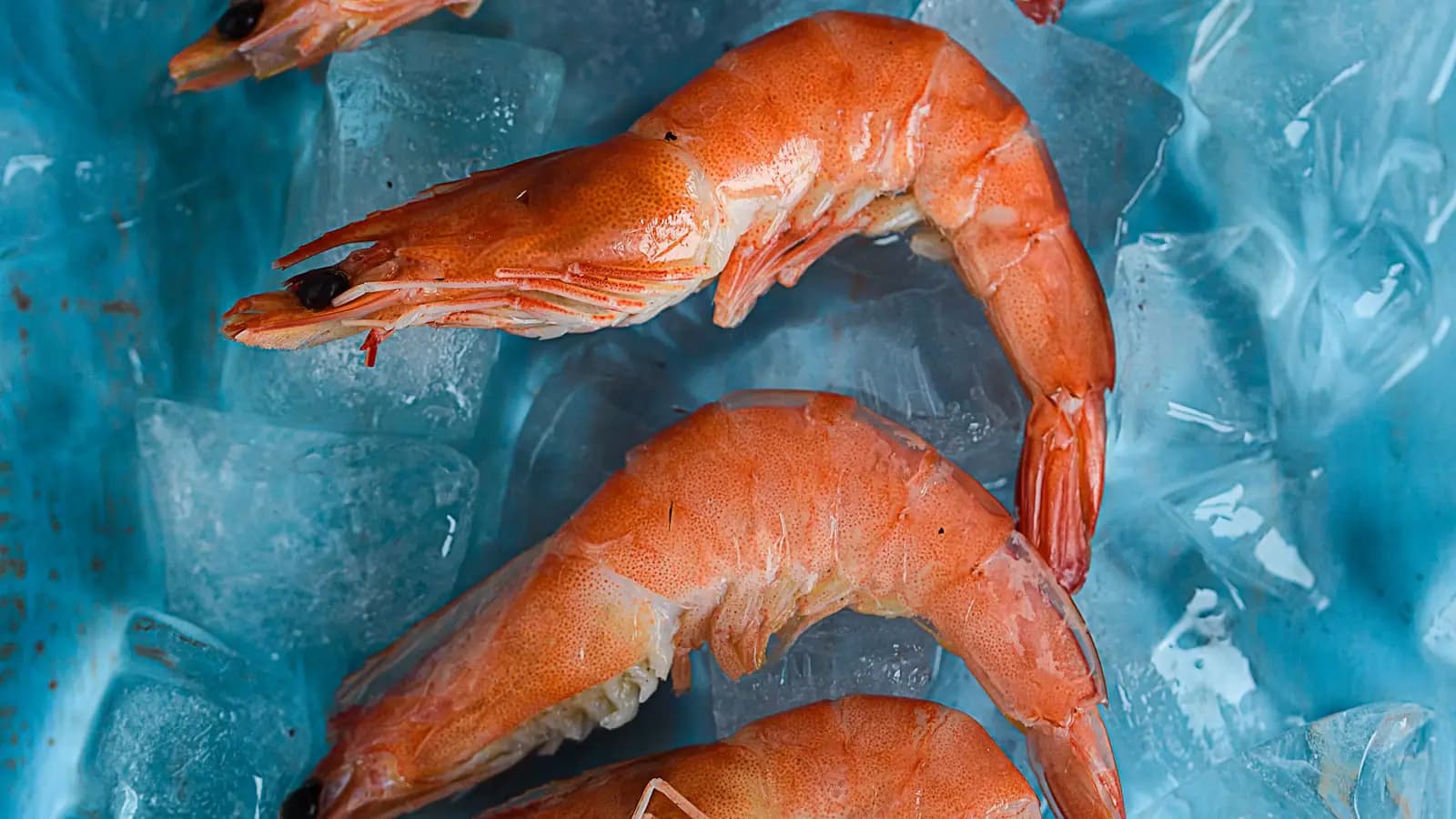
Some practical signals. Local shrimp is sold head-on far more often than imported product. Size grading tends to be less uniform. A place that buys off the boats will normally say which boat or which dock, because that is the selling point. And a seafood market at the harbour will tell you flatly what came in that morning and what is frozen.
Buying from the markets around the small craft harbour is the cheapest way to eat well here if you have a kitchen, and it is what residents do.
Where to eat, and why we are not giving you a list
We will not print a list of restaurants with hours and prices, and it is worth explaining why rather than pretending the page is complete. Restaurants on this coast open, close, move, change hands and change opening days faster than any guide can track, and several well-loved places have been through a storm, a rebuild and a sale since 2005. A confidently wrong list sends you across town for nothing.
What lasts is geography, so use that instead.
- Point Cadet and the small craft harbour. Boats, markets and the plainest seafood on the coast. Come here for the thing itself rather than the view.
- The beach road. The greatest concentration, the widest quality range, and the most tourist-facing. One building on it is worth knowing about for its own sake: the Old French House, a structure dating to the eighteenth century, which has housed a long-established Biloxi restaurant for decades and carries a marked high-water line from 2005 inside. Check it is open before you build an evening around it.
- The casino resorts. Several serious kitchens and several buffets, all under one roof with free parking. Under-appreciated for a rainy evening.
- The Back Bay and East Biloxi. Vietnamese bakeries, noodle shops and groceries, plus the least touristed seafood on the peninsula.
- Ocean Springs, over the bridge. The best walkable dinner street on the Mississippi coast, fifteen minutes east. If you want to choose a restaurant by walking past it, go there.
The Blessing of the Fleet
Worth timing a visit around if you can. Biloxi has held a Blessing of the Fleet since 1929: the shrimp boats are dressed overhead with flags and bunting, they parade past a priest who blesses them for the season, and wreaths are laid for the crews lost since the last one. It is a working ceremony rather than a tourist event, which is exactly why it is one of the best things that happens here. Dates move, so check with the city before you plan around it.
Buying seafood to cook yourself
If your room has a kitchen, this is the cheapest good eating on the coast and the most local thing you can do short of getting on a boat.
The markets around the Point Cadet harbour and along the Back Bay sell what came in that day. Head-on shrimp is normal here and is usually cheaper than headless; ask for them to be headed if you would rather not do it. Blue crab is sold live and by the dozen, which means a pot large enough to boil them and somewhere outside to do it.
Three things worth asking at the counter, all of which get a straight answer: what came off a boat today, what is frozen, and where it is from. Nobody is offended.
Keep everything properly cold on the way back. A Gulf summer car park does a great deal of damage in twenty minutes, and a cooler with ice in the boot is not optional between June and September.
Two practical warnings
Raw oysters carry a real risk in warm water months. Vibrio bacteria occur naturally in Gulf waters and concentrations rise with water temperature. For most healthy adults the risk is low, but for anyone with liver disease, a compromised immune system, diabetes or iron-storage disorders it can be severe, and health authorities advise those groups to eat oysters cooked rather than raw. Restaurants on this coast post that warning. It is not boilerplate.
Check the water before you gather anything yourself. Recreational harvest of oysters is regulated by the state and reefs are opened and closed on water-quality grounds. Beach water-contact advisories after heavy rain are routine here in summer and are posted by the state environmental agency rather than being visible from the sand. The rule is simple: if you did not check, do not harvest.
Last updated
Opening hours, ordinances and prices move with the season. We re-check this guide rather than rewrite it, and the date above is the last time someone did. How we research and correct.