Scavenger Hunts

Biloxi Blitz Scavenger Hunt (opens in a new tab)
Our very unique, immersive adventures are the only ones of their kind. We, unlike other companies, provide your very own remote…
2 hours
Prices checked

Marina
Last updated
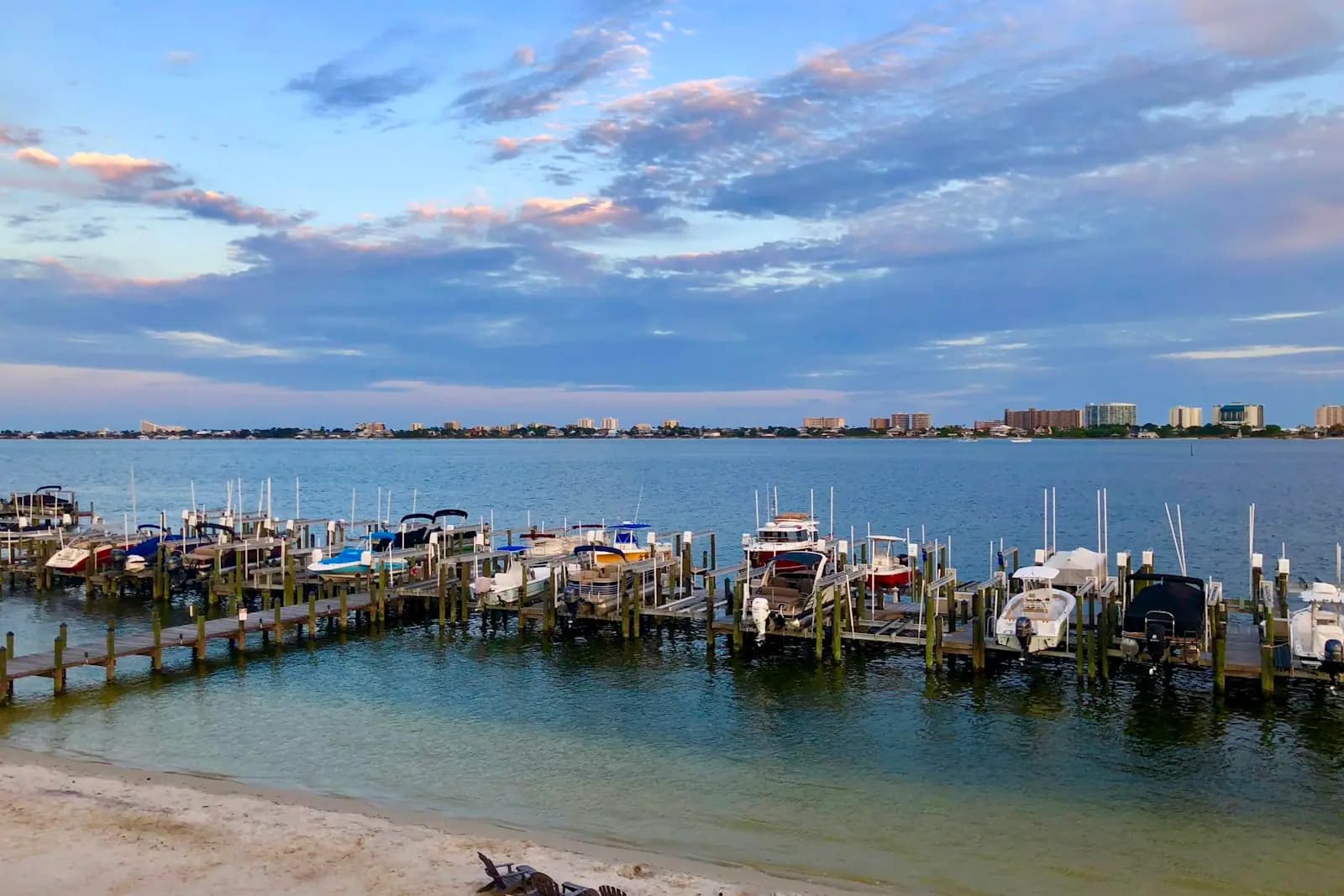
A working harbour of trawlers and charter boats on the Sound side, best at dawn when they leave and at four when they come back.
Photo: Jennifer SmitsPublic domain
A short distance east of the lighthouse, on the Sound side of the beach road, the seawall opens into a harbour basin full of boats that are mostly not pleasure craft. This is the Small Craft Harbor, and it is the best free thing to do in Biloxi that nobody puts in a brochure.
The fleet here is mixed and readable. Shrimp trawlers with their outrigger booms folded up against the mast, rigged for a fishery that still operates out of this coast. Charter boats, mostly centre-consoles and bay boats set up for inshore work in the Sound and the Back Bay, a few bigger hulls for the long run offshore. A shrimping-trip boat that takes visitors out, drags a net for twenty minutes and tips the result onto a sorting table. Fuel, ice, a ramp, and a row of cleaning tables with pelicans standing on the rail waiting for what comes off them.
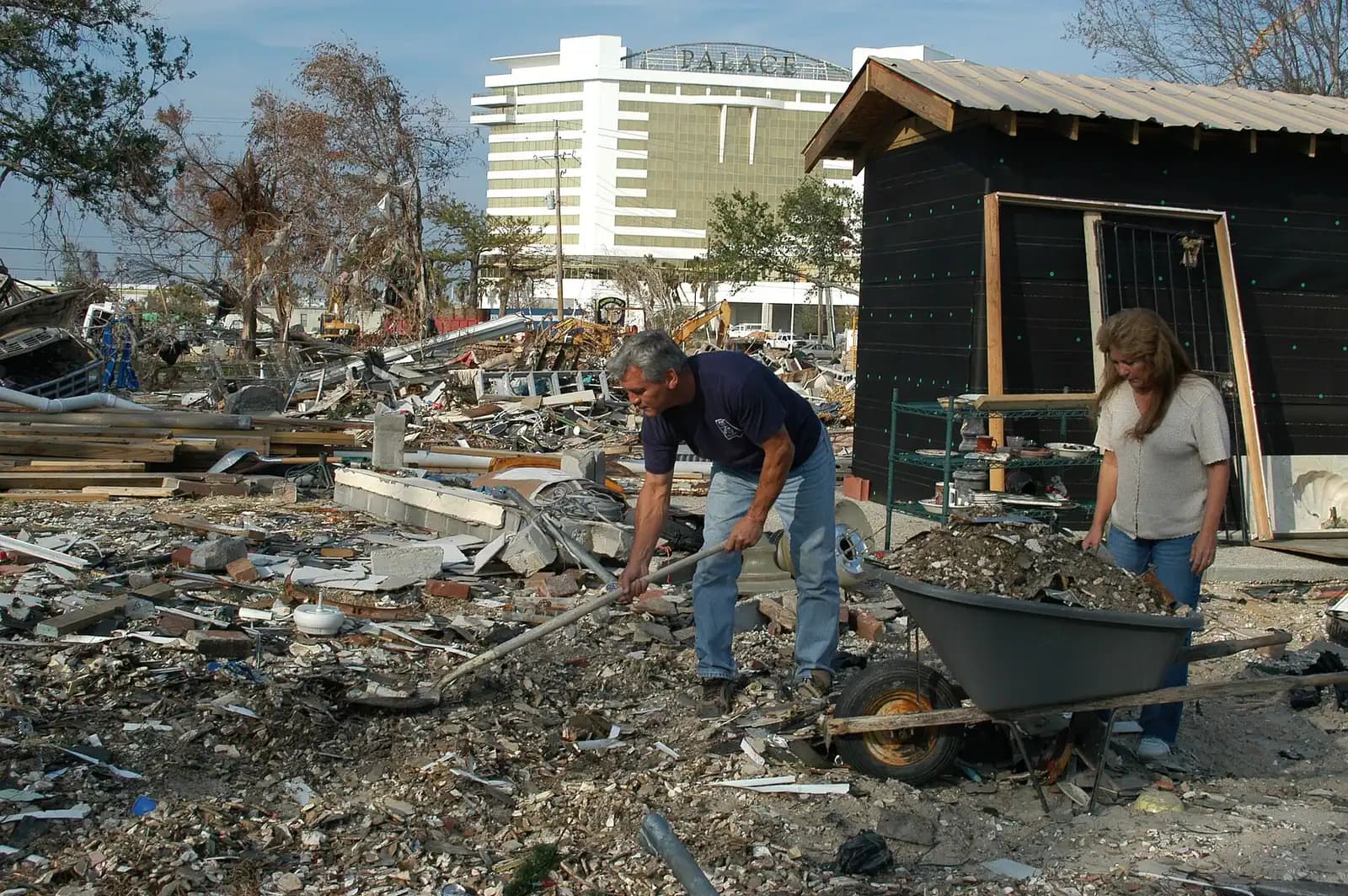
The harbour was wrecked on the morning of 29 August 2005 — a basin full of boats on an open shoreline in a twenty-plus-foot surge produces exactly the outcome you would expect — and what stands today was rebuilt afterwards. Like most of the Biloxi waterfront, what a visitor sees is younger than the storm.
The point of coming is the timing. Between about seven in the morning and four in the afternoon it is a car park with water in it. At dawn the boats leave, one after another, and at the end of the afternoon they come back and the cleaning tables get busy. Stand there at either hour and you are watching a working coast do the thing it has done since long before the casinos.
It costs nothing, it takes twenty minutes, and it pairs with the lighthouse a few hundred yards west.
The harbour sits on the Sound side of US 90, a short distance east of the Biloxi Lighthouse towards the foot of Main Street. Coming along the beach road you will see the masts and outriggers before you see the entrance.
There is parking beside the harbour and along the beach frontage. If you are coming for a dawn departure, note that the beach road is quiet at that hour and you will have no trouble finding a space; late afternoon in summer is busier.
On foot it is an easy walk from the lighthouse, which is the obvious pairing, and a longer but flat walk from the mid-strip casinos along the beachfront path.
From the east end and Point Cadet it is about five minutes by car. From Gulfport, drive east on US 90 for around twenty minutes. Note that this is not where the Ship Island ferry leaves from — that sails from Gulfport, and people arrive here every season expecting otherwise.
A working harbour has a daily rhythm, and if you arrive between the two ends of it you will wonder what the fuss is about.
First light. Charter boats leave early because the fish feed early and because summer afternoons here produce thunderstorms. From about an hour before sunrise there is engine noise, ice going aboard, coolers being loaded and a steady procession out of the basin into a Sound that is usually flat as glass at that hour. Watching it in the half-dark, with the lighthouse lit a few hundred yards west, is the most atmospheric twenty minutes available in this city.
Mid-morning to mid-afternoon. Almost nothing. Boats gone, dock quiet, heat building. Come at eleven and you will not understand why this page exists.
Late afternoon. They come back, and this is the better of the two windows for most visitors because you can see what was caught. The cleaning tables go into service, fillets come off, carcasses go over the side, and the pelicans and gulls that have been waiting on the rail all day collect the proceeds. Stand a respectful distance back, do not get between a captain and a cooler, and ask what they got — most people will tell you, and it is a far better report on the state of the fishery than anything published.
Evening. Quiet again, good light across the Sound, and a working basin at dusk is worth a photograph.
A few minutes of looking teaches you most of what the coast does for a living.
Shrimp trawlers are the obvious ones: heavy steel or wooden hulls, a wheelhouse forward, and two long outrigger booms carried vertically against the mast in harbour and swung out horizontally at sea, so the boat drags a net on each side. Nets hang from the rigging to dry. These are working vessels on a seasonal fishery, and how many are tied up mid-season tells you something about how the year is going.
Inshore charter boats are the fibreglass ones: bay boats and centre-consoles, shallow-draught, with a raised platform at the stern for poling or sight-casting, an enormous outboard and very little else. They fish the Sound, the Back Bay, the bridge pilings and the marsh drains, and this is the fishing most visitors should be doing.
Offshore boats are fewer and bigger, with a tower, outriggers for trolling and enough fuel for a long run past the barrier islands. The economics of that trip out of this harbour are covered on the fishing charters page.
The shrimping trip boat is the one that takes passengers rather than anglers, and it does the same job as a trawler at a tenth of the scale, for an audience.
Signs of the working harbour are everywhere: the ice house, the fuel dock, stacked traps, spools of net, boats on the hard with the paint off.
A small boat leaves the Biloxi waterfront, runs a short distance out, puts a shrimp trawl over the side, tows it for twenty minutes or so, then hauls it back up and empties it onto a table on deck. Everybody crowds round while a member of crew sorts the pile and names things.
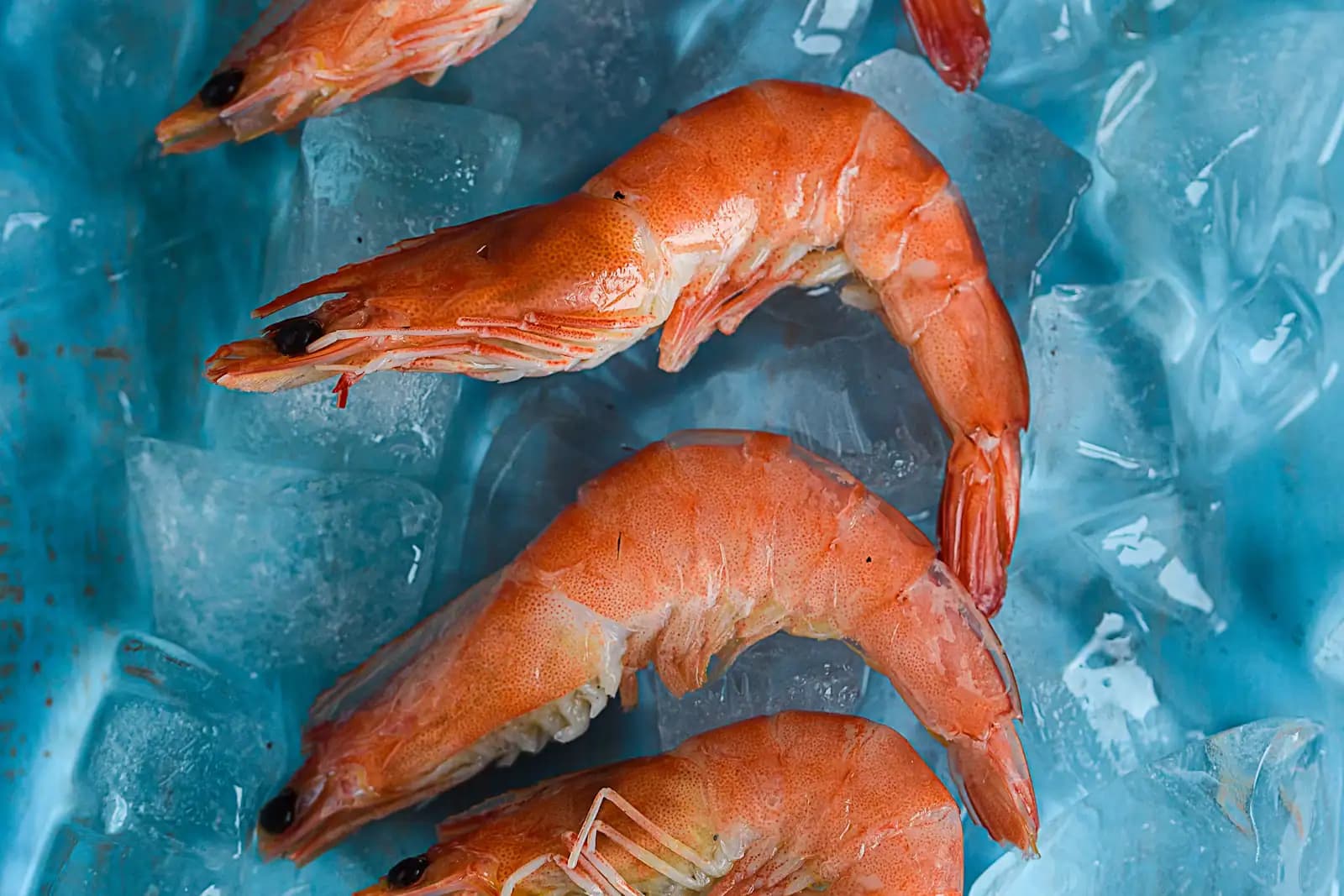
That is the whole trip and it is better than it sounds, because a Mississippi Sound trawl comes up full of oddities. Brown shrimp and white shrimp, obviously. Blue crabs. Small flounder, croaker, hardhead catfish, occasionally a stingray, sometimes a seahorse, and a mass of other things that get identified, passed round and put back. Children who have been bored by a museum are fully engaged by a pile of live animals on a table.
It is also the clearest single demonstration of how this city made its living. The trawl you are watching is a miniature of the gear that fed the canneries, and the by-catch question — everything that comes up that is not the target species — is right there in front of you rather than described on a panel.
It is short, it is cheap by boat-trip standards, and it runs on a seasonal schedule that is weather-dependent like everything else on this coast. Book ahead in summer. This is one of the very few things in Biloxi that you can genuinely book online rather than by telephone.
Biloxi has blessed its shrimp fleet since the late 1920s, and it remains the one day of the year when this harbour is the centre of the city rather than a working corner of it.
The form is Mediterranean Catholic and arrived with the fishing families who settled this coast. Boats are decorated, the fleet forms up and processes past a priest who blesses each vessel in turn, and there are wreaths for those lost at sea. It sits inside a longer festival weekend. The date moves and is generally in spring or early summer, so check locally rather than assuming a fixed weekend.
The rest of the year has a shape too. Shrimp seasons open and close on dates set by the state, and the harbour empties and fills accordingly. Hurricane season runs June to November, and when a system is genuinely coming the boats leave — running up the Back Bay and into the bayous where a narrow, tree-lined channel gives far better shelter than an open basin on the Sound. An empty harbour in September is not a quiet week; it is a warning.
Late autumn is the harbour at its most pleasant. The heat breaks, the water clears, the fishing is good, and the dock is busy without being hot.
Operators run these trips past Small Craft Harbor, or stop there as part of a longer route. We list what the booking data supports — not everything that mentions the name.
Some links below go to Viator, our booking partner. We earn a commission on bookings made through them — at no extra cost to you, and with no influence on what we recommend.
Scavenger Hunts

Our very unique, immersive adventures are the only ones of their kind. We, unlike other companies, provide your very own remote…
2 hours
Prices checked
Carnival

As you arrive in New Orleans, you'll be embraced by the soulful sounds of jazz, the aroma of delectable Creole cuisine, and the spirit of…
Full day
Prices checked
Private and Luxury

Experience the Mississippi Gulf Coast like never before! Take to the skies on an unforgettable helicopter tour departing from…
20 minutes
Prices checked
Top Product

Enjoy a prix-fixe menu at the Biloxi Hard Rock Cafe. Classic American cooking comes to the heart of The Playground of the South, where…
2 hours
Prices checked
Straight-line distances, so allow more on the road — the island is long and has one main parkway.
Landmark

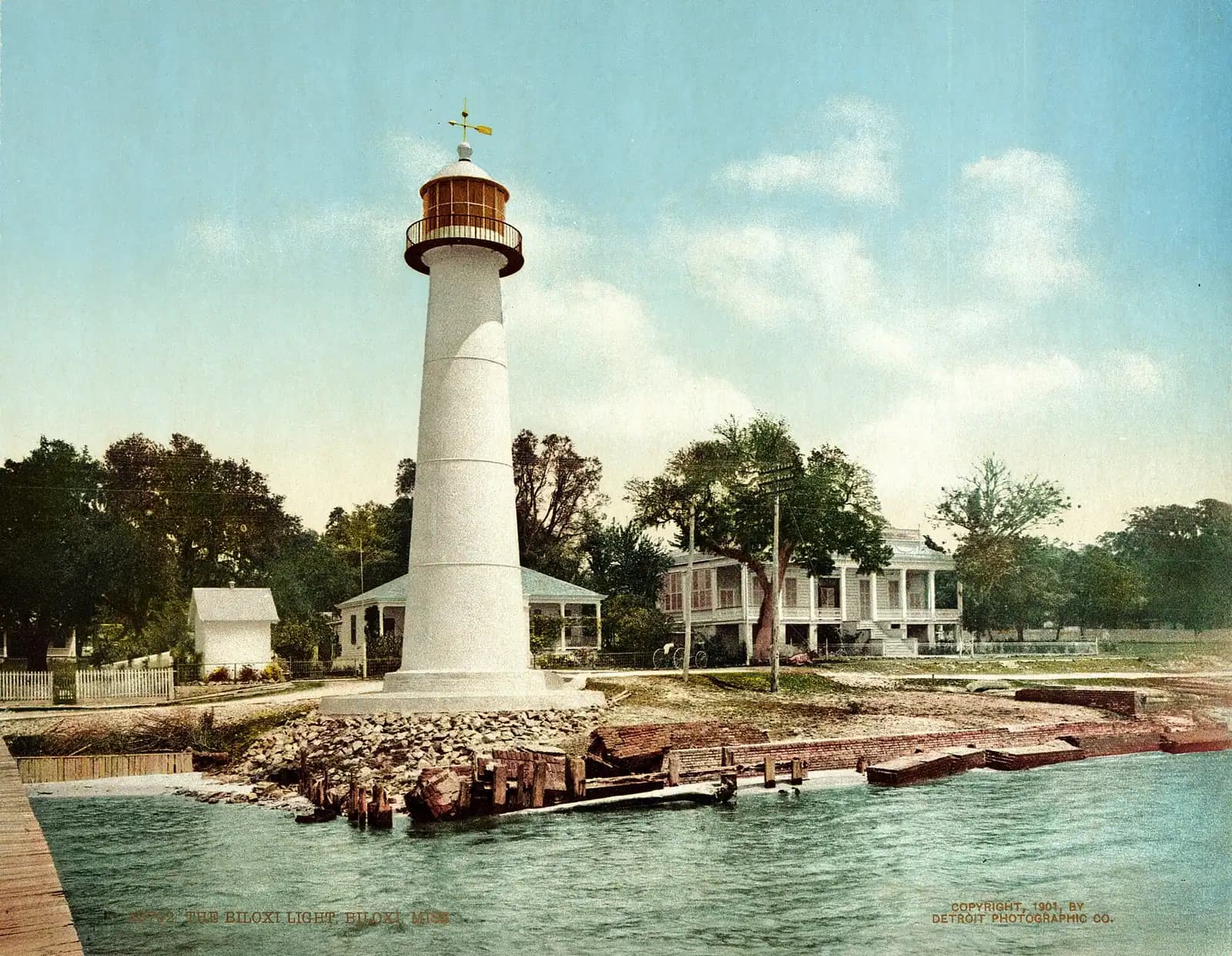
An 1848 cast-iron tower marooned in the median of a four-lane highway, kept for sixty-three years by one family of women.
0.5–1 hoursFree to see and photograph from the street or the beach. Climbing the tower carries a small fee when climbs are running.0.7 mi away
Beach

Miles of public sand along the beach highway, free to use, shallow a long way out, and with no shade anywhere on it.
1–4 hoursFree. The sand is public along its whole length and parking along the frontage is free in most places.540 ft away
Historic site

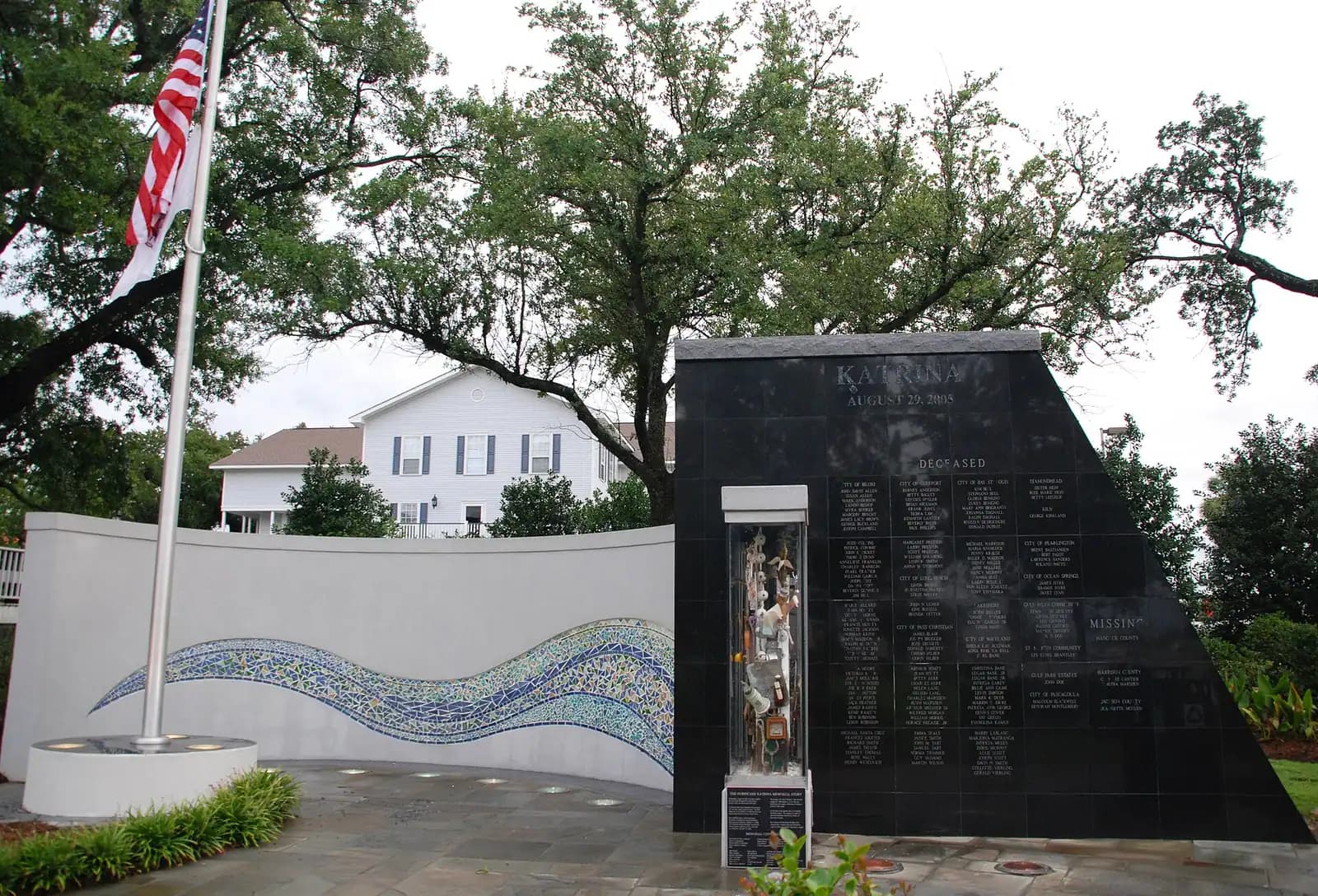
A monument on the Town Green carrying the names of people who died in this city on 29 August 2005.
15–30 minutesFree. There is no ticket and no attendant.850 ft away
Neighbourhood

The headland where the canneries stood for a century and where Mississippi's coastal casino era began in 1992.
1–3 hoursFree to walk. The museum and the schooner sailings are ticketed separately.2 mi away
Where this place fits into a day, and the pages that plan one.
Guide hub

Biloxi is confusing for about an hour and then it makes complete sense. You arrive on a four-lane highway with water on one side and casino towers…
Things to do

The casinos are what people search for and the seafood is what actually made this city. In 1881 the first cannery opened on the water here, and…
Who it suits

Bringing children to a casino city sounds like a category error and it is not, but it does require knowing three things that nobody tells you at…
Budget

Most coastal towns charge you for the privilege of arriving. A beach parking permit, a per-hour lot, a chair-and-umbrella concession that owns the…
Things to do

Most visitors ask for a deep-sea charter and most visitors would have a better day if they did not. That is the single most useful sentence on this…
Things to do

Biloxi is a port before it is a resort, and the boat trips reflect that. There is no fleet of glass-bottom catamarans here and no sunset booze…
Guide

A cannery town that became a casino town without ever stopping trawling. What is genuinely local, what is in season, and the question to ask before you order shrimp.
9 min readRhett Vuong
On the Mississippi Sound side of US 90, a short distance east of the Biloxi Lighthouse towards the foot of Main Street. You will see the masts and the trawler outriggers from the beach road before you reach the entrance. Note that this is not where the Ship Island ferry departs — that sails from Jones Park in Gulfport, about twenty minutes west, and people turn up here with tickets every season.
A short public boat trip on which a shrimp trawl is put over the side, towed for around twenty minutes and then hauled up and emptied onto a sorting table on deck while the crew names what came up. Expect shrimp, blue crabs, small flounder and croaker, and often something stranger. It is cheap by boat-trip standards, excellent with children, seasonal, weather-dependent, and one of the few things here you can book online.
Yes. Walking the dock and watching the fleet costs nothing, and parking beside the harbour and along the beach frontage has generally been free. What costs money is anything that floats: charters, the shrimping trip, fuel, ice, slips and ramp use, all priced by the individual operators. For most visitors the free version — standing on the dock at the right hour — is the whole attraction.
Two windows. Around sunrise the charter fleet leaves in a steady procession across a flat Sound, with the lighthouse lit a few hundred yards west, and it is the most atmospheric twenty minutes in Biloxi. From about four in the afternoon the boats come back and the cleaning tables get busy, with pelicans on the rail waiting. Between those hours it is a quiet, hot car park beside some water.
The date moves, generally falling in spring or early summer, so check locally rather than assuming a fixed weekend. Biloxi has blessed its shrimp fleet since the late 1920s. Boats are decorated, the fleet processes past a priest who blesses each vessel in turn, and wreaths are laid for those lost at sea. It sits within a longer festival weekend and is the one day the harbour is the centre of the city.