Skip to content
Search
Menu

We earn a commission if you book through this link. You pay the same price.

A golf fairway lined with tall evergreens with a flag on the green in the distance
Unsplash

Things to Do

Golf from Biloxi: Pine, Packages and Seasons

Last updated

Golf near Biloxi sits inland in the pine, not on the beach. Fallen Oak, casino stay-and-play packages, why winter is high season, and what to ask first.

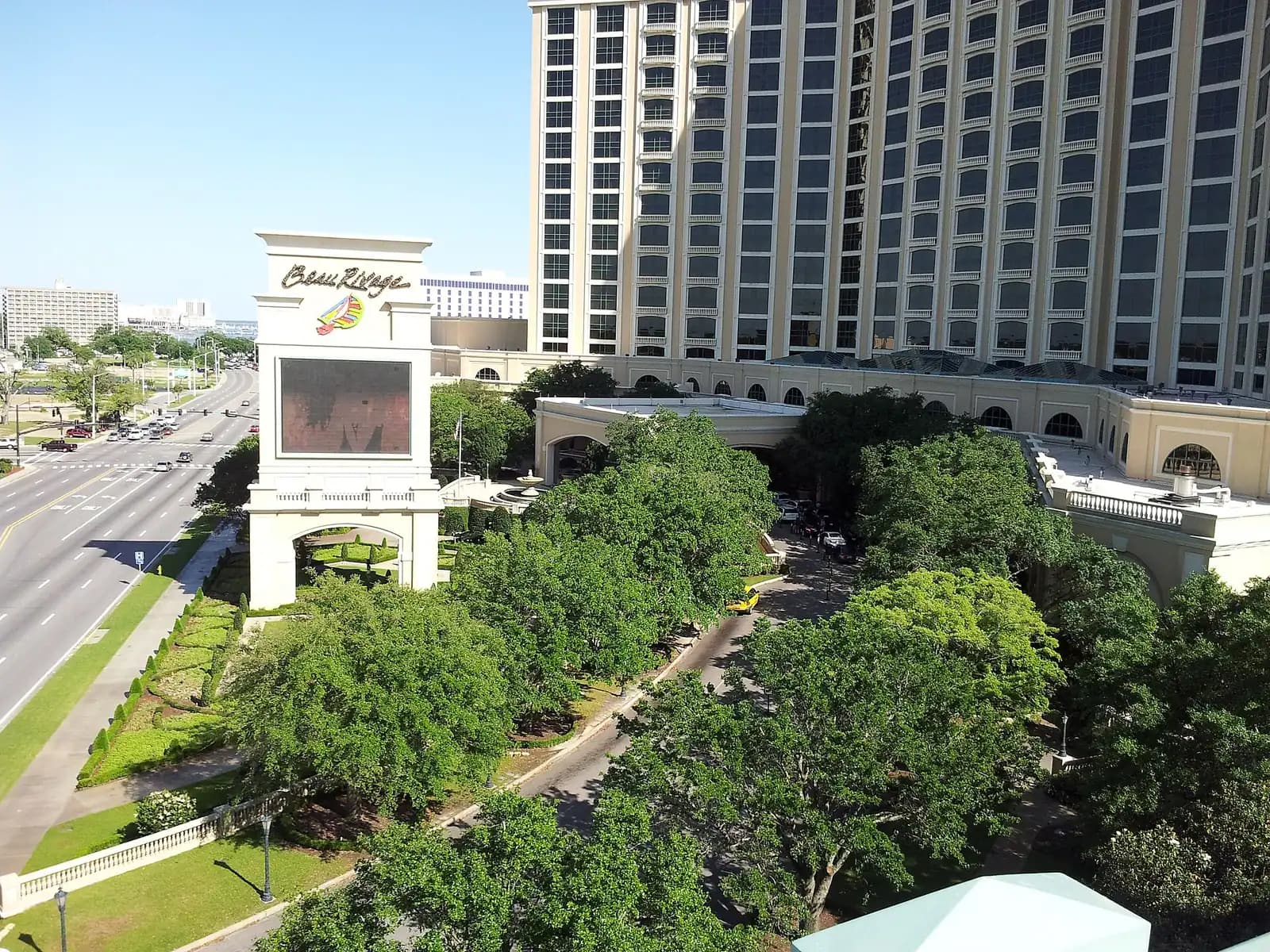
First correction: you will not be playing beside the water. The Biloxi peninsula is a narrow strip with a four-lane highway, a seawall and eight casino resorts on it, and there is no room on it for a golf course. Everything you can play from a Biloxi hotel room is a drive, and most of the good ones are a drive inland, north into the pine country around Saucier and Vancleave where the land finally has some shape to it. Twenty to forty-five minutes covers nearly all of it.

That geography defines the golf. This is not a links coast and it is not Florida resort golf either. It is southern pine and wetland: tall loblolly and slash pine down both sides of a fairway, Bermuda grass, standing water in the low ground, sand that is genuinely sandy, and enough elevation change in the inland courses to surprise anyone who thought Mississippi was flat. Wind matters less than it does on an exposed shoreline and humidity matters far more.

The second thing to understand is commercial. The reason a visitor plays here is almost always a casino package. The resorts have spent thirty years selling stay-and-play, the coast markets itself to golfers from Memphis, Jackson, Birmingham and the Midwest through the winter, and the deal is usually a room on the beach road plus rounds at courses twenty minutes inland. Fallen Oak, the Tom Fazio course that opened at Saucier in November 2006, is the trophy in that arrangement and is tied to staying at Beau Rivage. The Preserve is run by the Palace. The rest of the coast's courses are independent daily-fee clubs that take package bookings.

The third thing is the calendar, and it runs backwards from what visitors expect. Golf high season here is roughly October to April, when the heat has gone and northern golfers arrive; July and August are cheap and close to unplayable after about ten in the morning. Hotel rates run the other way, so a January golf trip to this coast is one of the better value propositions in the American South.

One hard lesson before you plan. The oldest course in Mississippi, Great Southern in Gulfport, opened in 1908 to a Donald Ross design and closed for good in May 2022. Courses on this coast have been lost to storms, to insurance and to developers. Confirm that the course you intend to play is open, this season, before you drive to it.

Where the courses actually are, and how far

Think of the golf as three arcs around a city that has none of its own.

North, into the pine. The inland courses sit twenty to forty minutes up from the water around Saucier and Vancleave, in and around the edge of the De Soto National Forest. This is where the land rolls, the trees are tall enough to matter off the tee, and the courses feel nothing like the coast you drove from. Fallen Oak is here.

West along the coast. Gulfport, Long Beach, Diamondhead and Bay St Louis carry a run of daily-fee and residential-community courses spread over about an hour of driving, most of them reachable on Interstate 10 rather than the beach road.

East, across the bay. Gautier, Ocean Springs and Vancleave give you the shortest drives from a Biloxi hotel if you are staying at the Point Cadet end, and they take you over the bay bridge, which is the pleasant way to start a morning.

Two practicalities. Use Interstate 10 rather than US 90 for anything more than ten minutes away, because the beach road is signalled the whole way and will cost you half an hour. And check where your package courses actually are before you book: a stay-and-play that looks tidy on a website can involve forty minutes each way, twice a day, in a rental car you assumed you would barely use.

Fallen Oak, and what a trophy round here involves

A golfer at the top of the backswing on a sunlit fairway under a blue skyUnsplash
A golfer at the top of the backswing on a sunlit fairway under a blue sky

Fallen Oak opened in November 2006 to a Tom Fazio design, on a large site at Saucier about half an hour north of the beach road, and it is the course the coast is known for outside Mississippi. Wide corridors through mature hardwood and pine, water used as scenery as often as hazard, and the maintenance budget of a casino flagship rather than a municipal course.

Access is the part to settle first. Play has been tied to staying at Beau Rivage rather than sold as a public tee time, so the round is part of a hotel arrangement and is priced accordingly. Confirm the current policy with the resort before you build a trip around it, because this is exactly the sort of thing that changes without being announced.

The PGA Tour Champions has played an event here since 2010, in the March and April window, under a couple of different names. If you want to watch rather than play, it is an unusually relaxed tournament to attend: small crowds by tour standards, easy parking, and a field of players whose names you have known for thirty years. Dates and titles move, so check the current schedule rather than a figure you remember.

For most visitors the honest advice is this: play Fallen Oak once if the trip justifies it, and spend the rest of the golf budget on two or three rounds at the coast's daily-fee courses, where the value is.

Why winter is the high season, and summer is not

When to go

October to April is the golf season. The humidity breaks in October, the coast holds afternoon temperatures in the sixties and seventies through much of the winter, and the course conditions are at their best. This is when the visiting golfers arrive, so tee sheets are full and green fees are at their annual peak.

January and February are the value sweet spot. Rooms on the casino strip are at their cheapest of the year while the courses are busy, which is a combination you do not get in Florida or Arizona. Bring a layer: mornings start in the forties and the wind off the Sound makes it feel colder.

March and April are the best conditions of the year, and also spring break and tournament season, so book early.

June to August is a different sport. Afternoon storms build inland most days and arrive over the coast quickly, the heat index runs well above the air temperature, and anything after ten in the morning is an endurance exercise. Green fees drop accordingly. If you play in summer, take the first tee time of the day, carry more water than you think, and get off the course when the sky darkens to the north. Lightning is the real hazard on this coast, not the heat.

September is the peak of hurricane season here, and courses can close for weeks after a storm. Check before you drive.

What the golf is actually like out there

Local tips

  • Bermuda everywhere. Fairways and greens are warm-season grass, which means grain on the greens and a lie that sits up in summer and thins in a cold snap. Winter overseeding varies by course, so ask what the surfaces are doing before you rebuild your putting stroke.
  • The water has residents. Alligators live in the ponds and ditches on the inland and low-lying courses, and they are a normal part of the landscape here. Leave the ball. Do not approach the bank for it, and keep dogs and children away from the water's edge entirely.
  • Insects. Mosquitoes from dusk, and in the wetter months no-see-ums in the low ground. Repellent goes in the bag, not in the car.
  • Soft ground after rain. Cart-path-only rules are common for a day or two after heavy weather, which on a long inland course adds a great deal of walking to what you planned.
  • Pace is unhurried compared with a big-city public course, and starters here are generally willing to slot a twosome into a gap.
  • The sun is the underrated danger. Shade is real on the pine courses and nonexistent on the coastal ones. Long sleeves beat sunscreen after the third hole.
  • Take cash for the turn, and expect the halfway house to be a window rather than a restaurant.

The casino package, decoded

How they compare

Nearly every golf trip to this coast is sold as a package, and the packages are not equivalent. These are the questions that decide whether yours is good value.

What to askWhy it matters
Which specific courses, on which days?"Choice of coast courses" can mean a forty-minute drive each way to a course you did not want
Are tee times guaranteed or requested?A requested time on a January Saturday is not a time
Is the cart included, and is it mandatory?Cart fees are the commonest hidden line on a coast package
Are replays available, and at what rate?Afternoon replay rates are where the real value sits on short winter days
Is the room a casino room or a rate-plus-fee?Ask whether a nightly resort fee is added on top of the package price
What happens if it rains?Rain policies differ course by course, and January on this coast is not dry

Two habits save money. Book midweek: Monday to Thursday is materially cheaper for both rooms and tee sheets. And ask the courses directly what they would charge you for the same rounds, then compare. Sometimes the package wins and sometimes it exists to sell rooms.

If you are a group of eight or more, ring the golf sales desk at the resort rather than booking online. Group rates here are negotiated, not published.

The state's oldest course is gone, and why that is a warning

Before you book

Great Southern Golf Club opened in Gulfport in 1908 on a Donald Ross design and was the oldest course in Mississippi. Katrina took the ninety-five-year-old clubhouse and hundreds of trees in 2005. The club never fully recovered financially, filed for Chapter 11 protection in 2019, was sold to a residential developer in 2021, and closed in May 2022 after 114 years of play.

It is worth knowing for its own sake, because old golfing guides to this coast still list it and visitors still drive to Beach Drive looking for it. It is also worth knowing as a general rule for planning golf on the Mississippi coast.

Courses here sit on land that floods, in a market that is thinner than Florida's, in the path of storms that arrive every few years. Since 2005 this coast has lost courses to surge, to insurance costs, to bankruptcy and to residential development, and it has gained others. The tee sheet you found on an aggregator site may belong to a club that changed hands last spring.

So: confirm directly with the course, in the week you travel, that it is open and taking public play. Ring rather than email. It takes four minutes and it is the difference between a round and a wasted morning driving between Gulfport and Gautier.

On the ground

Where to go

Every place below has its own page — hours, parking, what it costs and what to expect when you get there.

  • Entertainment

    A motion-blurred casino floor with rows of lit slot machines
    Free

    Beau Rivage Resort & Casino

    The resort that brought Las Vegas building to Mississippi in 1999, and reopened exactly one year after Katrina closed it.

    1–5 hoursNo admission charge to enter the resort or walk the public areas. Rooms, dining, the spa and theatre tickets are all priced separately.

  • Neighbourhood

    A palm-lined pedestrian street with low shopfronts and cafe tables set out along it
    Free

    Ocean Springs

    Two miles east across Biloxi Bay: galleries, live oaks, a walkable main street and the site of the first French settlement on this coast.

    2–6 hoursFree to visit. Galleries are free to browse; the museum and Shearwater are separate.

  • Neighbourhood

    Boats tied along a dock in a sheltered marina basin
    Free

    Pass Christian

    An oyster harbour, a shaded drive of rebuilt houses and the site of the highest storm surge ever measured in the United States.

    2–5 hoursFree. The harbour, Scenic Drive and the waterfront parks cost nothing.

  • Neighbourhood

    Rows of boats moored in a marina basin on flat water at first light with a low skyline beyond
    Free

    Gulfport

    Mississippi's second city, twelve miles west along the beach road, holding the Ship Island ferry, the airport and the aquarium.

    1–5 hoursFree to visit. Jones Park and the harbour cost nothing; the ferry, the aquarium and the casinos do not.

Straight answers

Questions people actually ask

Is there a golf course in Biloxi itself?

Not on the peninsula. Biloxi's south shore is a four-lane highway, a seawall and the casino resorts, and the land is too narrow for a course, so every round you play from a Biloxi hotel involves a drive. The nearest good golf is twenty to forty minutes inland around Saucier and Vancleave, with more west through Gulfport towards Diamondhead and Bay St Louis and east around Gautier. Budget the driving time in both directions.

Can you play Fallen Oak without staying at Beau Rivage?

Historically, no. Fallen Oak has been operated as the Beau Rivage's course rather than a public daily-fee club, with play tied to staying at the resort, and it is priced as a flagship round. Policies of this kind do change, so ask the resort's golf desk directly rather than relying on an aggregator listing. If you want to see the course without playing it, the PGA Tour Champions event held there since 2010 is easy to attend.

When is the best time of year for golf near Biloxi?

October through April, and March and April give the best conditions of the year. Winter is the coast's golf high season: the humidity has gone, afternoons sit in the sixties and seventies, and northern golfers fill the tee sheets. January and February pair busy courses with the cheapest casino hotel rooms of the year, which is the best value combination on this coast. Avoid midday golf from June to August entirely.

Is Great Southern Golf Club in Gulfport still open?

No. Great Southern opened in 1908 as a Donald Ross design and was the oldest course in Mississippi, but it never recovered financially from Hurricane Katrina, which destroyed the clubhouse and hundreds of trees. The club filed for Chapter 11 in 2019, the land was sold to a residential developer in 2021, and the course closed in May 2022 after 114 years. Older guides still list it, which is why visitors still turn up.

How much does golf cost on the Mississippi Gulf Coast?

Less than comparable Florida or Alabama resort golf, with one obvious exception. The coast's daily-fee courses are inexpensive by American resort standards, especially midweek and in summer, while Fallen Oak is priced as a flagship round tied to a hotel stay. Rates swing sharply by season, and cart fees are often quoted separately. Get the current number from the course or the resort golf desk, and compare the package price against booking the same rounds yourself.

Are there alligators on the golf courses near Biloxi?

Yes, and they are unremarkable here rather than an emergency. The ponds, ditches and wetland margins on the inland and low-lying courses hold alligators year round, and they are most active in warm months. The rule is simple: leave any ball that lands near the water, never approach the bank to look for one, and keep children and dogs well back. Report an animal that is on a fairway rather than trying to move it.

Do the Biloxi casinos offer golf packages?

Most of the larger resorts do, and the package is how the great majority of visiting golfers play this coast. The shape is a room on the beach road plus rounds at courses twenty to forty minutes inland. Before you book, pin down which courses and which days, whether the tee times are guaranteed rather than requested, whether carts are included, what the replay rate is, and whether a nightly resort fee sits on top of the quoted price.