Neighbourhood
Free
Point Cadet
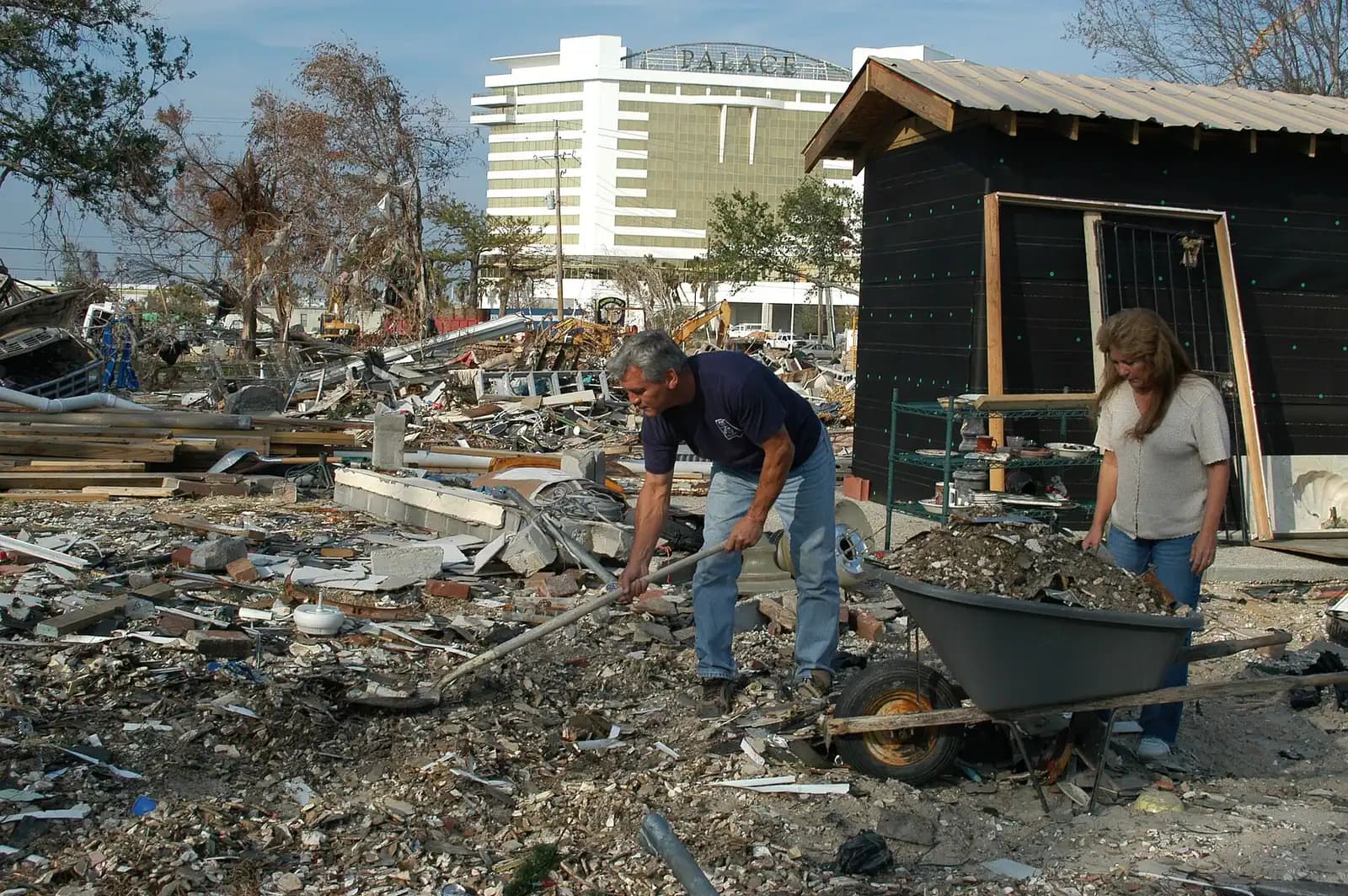
The headland where the canneries stood for a century and where Mississippi's coastal casino era began in 1992.
1–3 hoursFree to walk. The museum and the schooner sailings are ticketed separately.130 ft away
Museum
Last updated
Canneries, schooners, net-making and the Vietnamese shrimp fleet: the museum that explains why Biloxi is here at all.
If you only go into one building in Biloxi, make it this one. Not because it is the grandest — it is not — but because everything else in the city makes more sense afterwards. The casinos, the bridges, the street names, the restaurant menus and the shape of the peninsula all come out of an industry that this museum is the only place to see whole.
Biloxi built its first seafood cannery in 1881. Within a generation the city was processing oysters and shrimp on a scale that let it call itself the Seafood Capital of the World, and it pulled in labour from everywhere to do it: families from the Dalmatian coast, from Bohemia and Poland, from the Louisiana bayous, and from about 1977 a large Vietnamese community that moved from cannery work into boat ownership so completely that by the end of the 1980s roughly half the shrimpers in Mississippi were Vietnamese.
The galleries cover the working parts rather than the romance. Net-making. Marine blacksmithing — a forge, because a wooden boat with iron fittings needs a blacksmith within reach of the dock. Wooden boat building, catboats and the flat-bottomed Biloxi skiff. Oystering and shrimping gear, the wetlands the whole thing depends on, and the charter fleet that replaced part of the commercial one.
The museum also owns two boats. Glenn L. Swetman and Mike Sekul are sixty-five-foot two-masted replicas of the schooners that worked this coast under sail into the early twentieth century, and they sail from the pier outside.
And it is a Katrina building in the most literal sense. The old museum was destroyed on 29 August 2005 and the institution spent nine years closed. What opened in August 2014 is a new three-storey building with a hurricane exhibit and a theatre inside it, written by people who lost the previous one.
The museum stands at Point Cadet, the eastern tip of the peninsula, on the water beside the schooner pier and within a short walk of the Golden Nugget.
Driving from the main casino strip, head east on US 90 until the land runs out at the Biloxi Bay bridge, then follow the signs down onto the Point. From Ocean Springs it is the first turning after you come off the bridge westbound. There is parking on site.
This is the one museum in the city that is genuinely walkable from a hotel, provided that hotel is at the east end. From anywhere along the middle of the beach road it is a five to ten minute drive rather than a walk, particularly in summer.
Combine it with the schooner pier, the Point Cadet waterfront and a seafood lunch nearby, and you have the best half-day in Biloxi that does not involve a boat to an island.
The geography did it. A shallow sound full of oyster reefs, a bay behind the town for shelter, brown shrimp and white shrimp running in season, and a rail connection east and west by the 1870s. Add canning technology and you have a processing city.
The first Biloxi cannery went up in 1881. By the early twentieth century the waterfront was a line of factories running around the clock in season, with a fleet of schooners bringing in oysters faster than the sheds could shuck them. The city's promotional claim to be the Seafood Capital of the World was an industrial statistic before it was a slogan.
That industry shaped the ground. Canneries built rows of small houses for their workers, and Point Cadet at the eastern end of the peninsula filled up with them. The churches, the social halls and the family names on the boats all date from this, and so does the food: Biloxi's cooking is Gulf seafood filtered through Croatian, Cajun, Creole and more recently Vietnamese kitchens, which is a combination you will not find anywhere else on this coast.
What the museum does that a plaque cannot is show the work. Standing in front of a net-maker's bench, or a blacksmith's forge kept beside a boatyard, converts an abstraction about an industry into a set of specific, difficult jobs done by specific people.
Cannery work was seasonal, cold, wet and paid by the pot. It went to whoever would take it, and on this coast that meant immigrants and, for decades, children.
Around 1911 the photographer Lewis Hine came to Biloxi for the National Child Labor Committee and photographed children working in the canneries here — small figures standing on boxes at the shucking benches before dawn, in the same frames as adults. Those photographs became part of the evidence base that changed American child labour law, and the fact that some of them were taken a few hundred yards from where you are standing is not something the city advertises. The museum does not hide it.
The other great labour story is more recent. Vietnamese families began arriving from about 1977, many of them from fishing communities, taking cannery jobs first and then buying boats. It was not a smooth arrival — there was real hostility along the Gulf coast in those years — but within about a decade roughly half the shrimpers in Mississippi were Vietnamese, and today the fleet, the markets and a good part of the coast's cooking reflect that.
Any account of Biloxi seafood that stops at schooners and canneries is telling you about 1900 and ignoring the last fifty years. This one does not.
The building runs to three floors and roughly twenty thousand square feet, which is bigger than most visitors expect from the outside.
Allow ninety minutes to two hours. Add a couple of hours if you are also sailing on one of the schooners from the pier outside, which is a separate booking.
The museum opened in 1986, in an older building on the Point Cadet waterfront. On 29 August 2005 it was destroyed. Not damaged — destroyed, along with the exhibits, much of the collection and the records that go with it.
What follows is the part that matters. It did not reopen quickly. A small local museum with a wrecked building, a scattered collection and a city with far more urgent problems took nine years to come back, and the new three-storey building on Point Cadet opened to the public on 2 August 2014.
That timeline is the honest scale of recovery on this coast, and it sits awkwardly against the casino story, where a large resort could reopen inside a year. Capital moves fast. Small institutions do not.
The museum is not sentimental about it. There is a hurricane gallery with a theatre, and it is factual about what happened here on that morning and about what this coast has learned to expect between June and November. Visitors who come to Biloxi wondering why so much of it looks new will find the answer here more clearly than anywhere else, including from the people who staff the desk.
Straight-line distances, so allow more on the road — the island is long and has one main parkway.
Neighbourhood
The headland where the canneries stood for a century and where Mississippi's coastal casino era began in 1992.
1–3 hoursFree to walk. The museum and the schooner sailings are ticketed separately.130 ft away
Marina

Two sixty-five-foot replicas of the oyster schooners that worked this coast under sail, and you get to help haul the halyards.
2–3 hoursPublic sailings are ticketed at a modest per-person rate, with reduced rates for children. Private charters are priced separately.320 ft away
Entertainment
Mississippi's coastal casino era began on this patch of Point Cadet in 1992, at the quiet end of the strip beside the bay bridge.
1–4 hoursNo charge to enter or walk the public areas. Rooms, dining and parking-adjacent extras are priced separately.0.2 mi away
Water feature

The sheltered estuary behind the peninsula, where the shrimp grow up and the fleet goes to hide from hurricanes.
0.5–4 hoursFree. Public ramps, bridges and shoreline access cost nothing, though some ramps may charge for launching.2.3 mi away
Where this place fits into a day, and the pages that plan one.
Guide hub

Biloxi is confusing for about an hour and then it makes complete sense. You arrive on a four-lane highway with water on one side and casino towers…
Guide hub
Almost everything on this list is on one road or reached from it. US 90 runs the length of the Biloxi peninsula with the Mississippi Sound on the…
Things to do
The casinos are what people search for and the seafood is what actually made this city. In 1881 the first cannery opened on the water here, and…
Things to do
For a city of fewer than fifty thousand people, Biloxi carries an improbable number of separate histories, and they do not blend. The French landed…
Who it suits
Bringing children to a casino city sounds like a category error and it is not, but it does require knowing three things that nobody tells you at…
Guide
Six museums, an 1848 lighthouse in the middle of a highway, and one site whose interpretation is contested. What each one is, and which to give your afternoon to.
10 min readAdeline Boudreaux
Guide
Almost everything a visitor sees on the Biloxi waterfront is younger than 2006. This is why, told with the dates, the numbers and the things that were not rebuilt.
9 min readAdeline Boudreaux
Guide
A shallow warm beach with no surf, a working shrimp boat that hauls a net for you, and two of the best children's attractions sitting twenty-five minutes down the road in Gulfport.
8 min readCorinne Ladner
Because for a stretch of the late nineteenth and early twentieth centuries it was processing oysters and shrimp on an industrial scale that few places matched. The first cannery was built here in 1881, the shallow Sound was thick with oyster reefs, and a fleet of sailing schooners fed factories that ran around the clock in season. The claim was an industrial statistic before it became a slogan, and the museum is where you can see the evidence.
Nine years. The museum, founded in 1986, was destroyed on 29 August 2005 along with exhibits, collection material and records. A newly built three-storey building at Point Cadet opened to the public on 2 August 2014. That timeline is a more honest measure of recovery on this coast than the casino reopenings, and the museum's own hurricane gallery does not pretend otherwise.
Three floors covering shrimping, oystering, wooden boat building, the flat-bottomed Biloxi skiff, net-making, marine blacksmithing, charter fishing, wetlands and marine resource management, plus a substantial hurricane exhibit with its own theatre and a large collection of historical photographs. The museum also owns and operates two replica Biloxi schooners, which sail from the pier outside on a separate ticket.
Yes, with one caveat. The boats, the forge, the net-making bench and the gear are physical, visible things that hold attention better than most local-history museums, and the schooner sailings from the pier outside are a genuine highlight for older children. The caveat is the labour history: the exhibits do not skirt the fact that children worked these canneries, and younger visitors may have questions.
It is at Point Cadet, the eastern tip of the peninsula, a short walk from the Golden Nugget and beside the schooner pier. From the main run of casino towers along the middle of the beach road it is a five to ten minute drive rather than a walk, particularly in summer heat. There is parking on site, and it pairs naturally with the Point Cadet waterfront and a seafood lunch nearby.