Skip to content
Search
Menu

We earn a commission if you book through this link. You pay the same price.

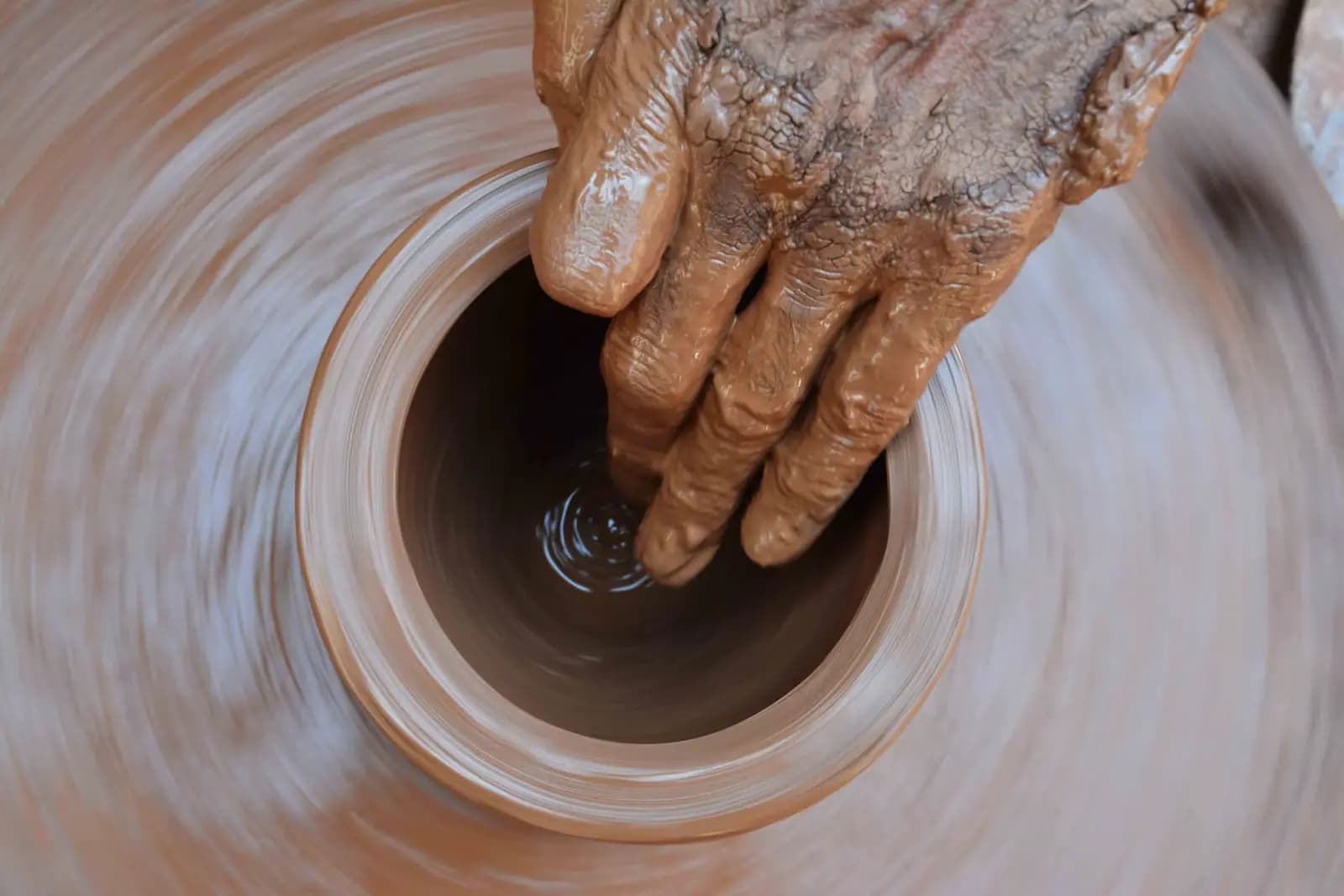
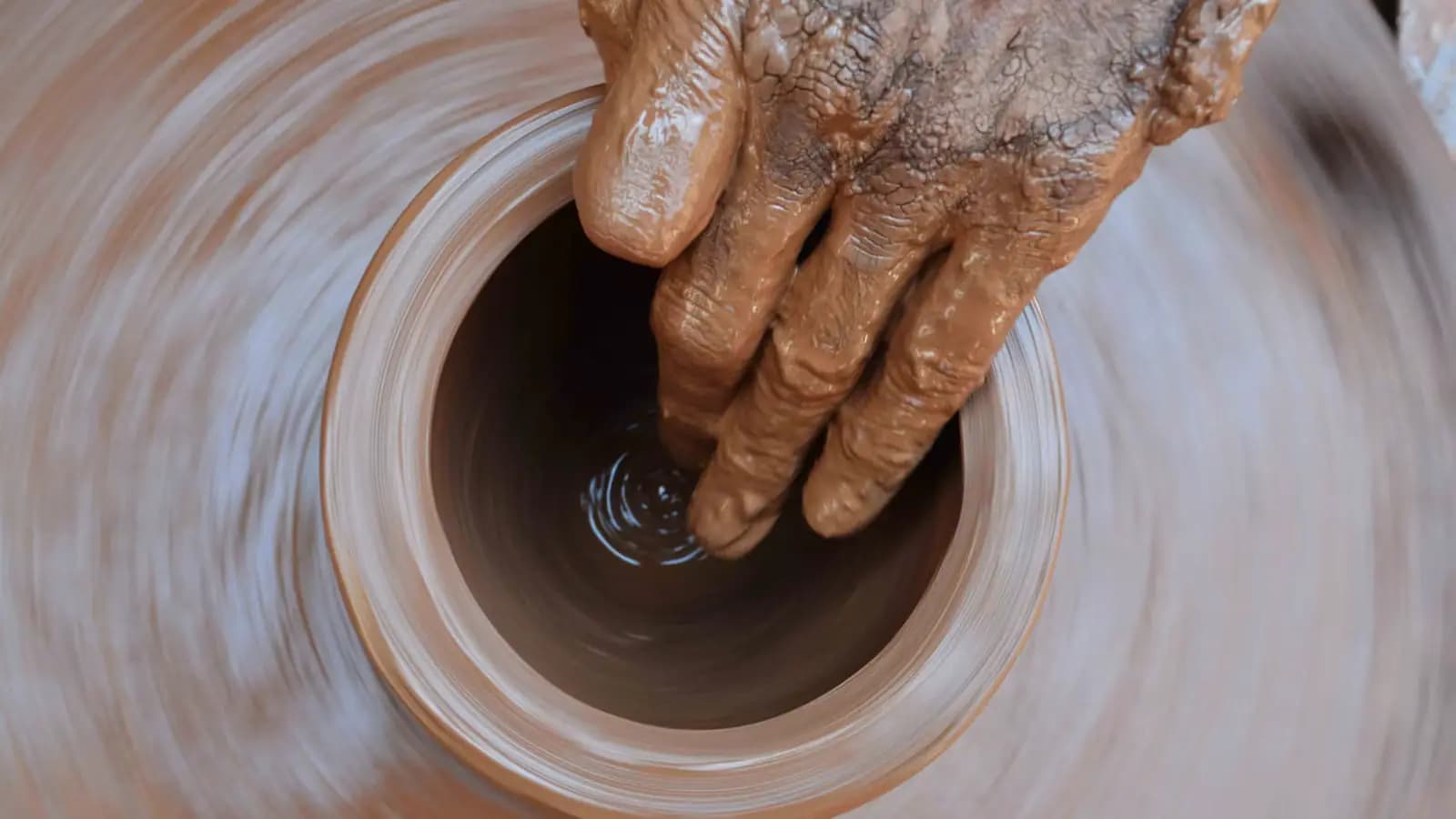
A potter's hands shaping wet clay on a spinning wheel
Aaron Manning

Museum

Ohr-O'Keefe Museum of Art

Last updated

Frank Gehry's metal pods set among live oaks, built to hold the twisted, paper-thin pottery of a man who called himself mad.

Two things make this museum worth an afternoon, and neither is obvious from the road. The first is a potter who died in 1918 believing he was a genius, which almost nobody agreed with at the time and almost everybody agrees with now. The second is that Frank Gehry designed the buildings to fit around a stand of live oaks rather than clearing them, and the result is the only piece of architecture on the Mississippi coast that people travel to see.

George Ohr was born in Biloxi in 1857 and worked here for most of his life. He dug much of his clay out of the Tchoutacabouffa River, the stream that runs into the Back Bay at the western edge of the city, and he threw it into forms nobody else was making: walls thin enough to be alarming, sides crumpled and pinched and folded while still wet, glazes that ran in colours American art pottery of the 1890s simply did not use. He signed himself the Mad Potter of Biloxi, grew a moustache he could tie behind his head, wrote rude verses on his pots and told anyone who would listen that he was the greatest potter alive. He sold very little.

The campus that now holds the work is a group of curved metal and glass buildings threaded between the oaks on a few acres beside the beach road. Construction began in 2004. In August 2005 a casino barge was carried off the water and dropped onto the half-built site, and what the museum opened in stages years later is partly a rebuild of a building that had already been destroyed once.

Allow ninety minutes to two hours. The galleries are not vast, and that is the correct scale: Ohr's pots are small, individually strange objects that reward standing still, and the buildings around them are doing half the work.

Getting there and parking

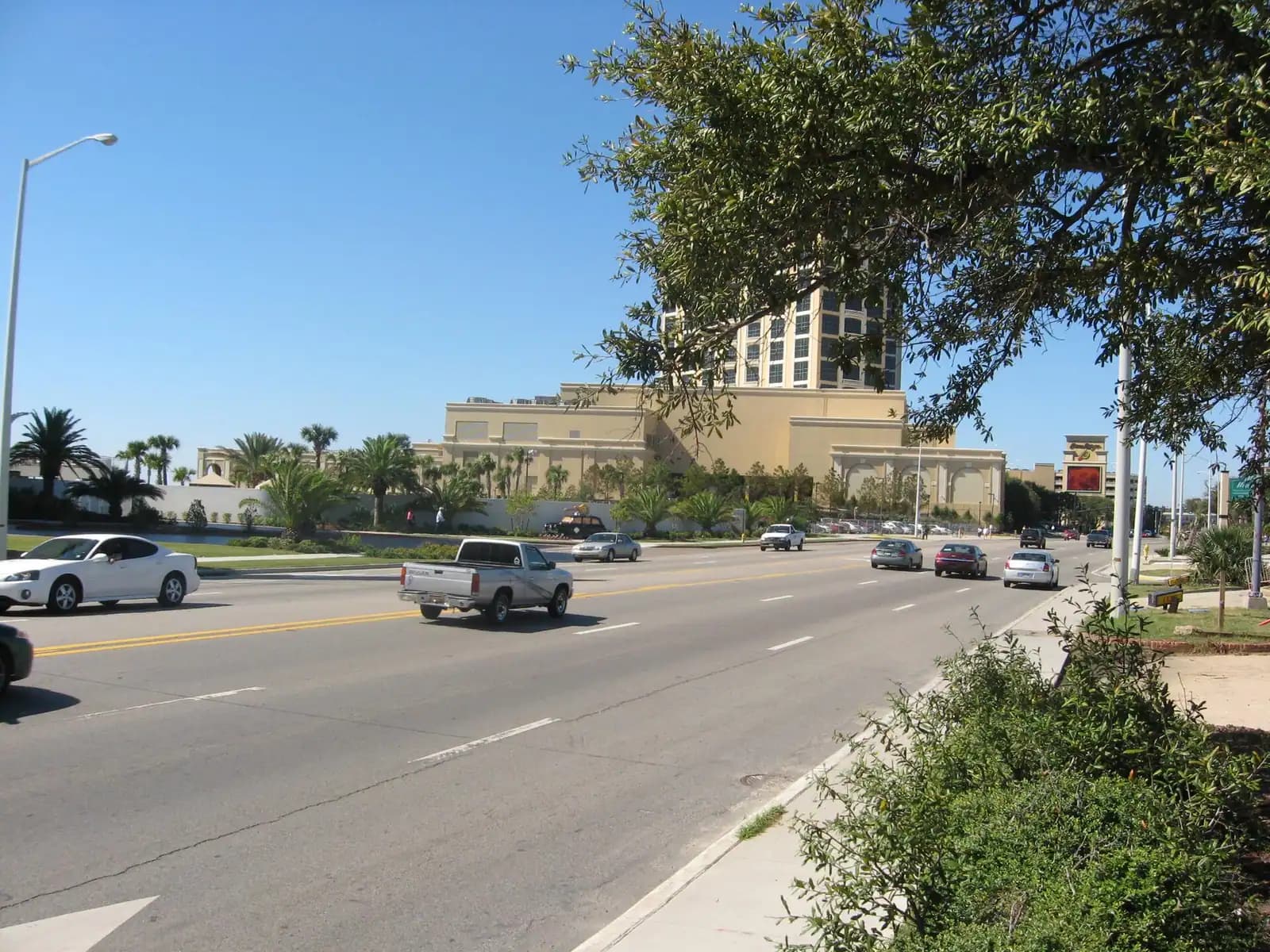
The campus sits on the north side of US 90 between the lighthouse and the eastern casinos, set back from the road behind its live oaks, which means it is easy to drive past without noticing it. Watch for the curved metal buildings among the trees rather than for a conventional museum frontage.

There is parking on site. From the main casino strip it is a few minutes east or west depending which end you start from, and from the lighthouse it is a short drive or a walk of fifteen to twenty minutes along the beachfront path in reasonable weather.

From Ocean Springs, cross the Biloxi Bay bridge westbound on US 90 and continue past Point Cadet for about five minutes. From Gulfport, drive east along the beach road for around twenty minutes.

There is no useful public transport to it. If you are staying at a casino hotel without a car, this is a short taxi or rideshare hop rather than a walk in August.
The man who was right and nobody believed

Look at almost any American art pottery from the 1890s and you get a symmetrical vessel with a controlled glaze, made to sit on a mantelpiece. Then look at an Ohr pot. The wall is as thin as a teacup. The neck has been squeezed shut. The side has been pushed in with a thumb and left, and the whole form looks as if it is in the middle of collapsing and has decided not to. The glazes are gunmetal, raspberry, mottled green, sometimes several at once.

He was doing this in Biloxi, a seafood town of a few thousand people, and selling almost nothing. He wrote that no two of his pieces were alike and claimed to have made more than twenty thousand of them. He called his workshop the Pot-Ohr-E, worked it as a tourist attraction, and let people come and watch. By around 1909 he had stopped potting altogether.

A fire in the 1890s is widely reported to have taken his workshop, and accounts differ on how much of the stock went with it. What is not in doubt is that at the end of his working life he crated up what he had left and refused to break it up, insisting it was a single body of work for the nation to buy.

Nobody bought it. He died in New Orleans in 1918, and the crates went into storage.

Fifty years in a garage

The pots sat in a building behind the motor business Ohr's sons ran in Biloxi. Not a vault, not a museum store: a garage, on the Gulf coast, through five decades of heat, damp and hurricanes.

In 1970 a New Jersey antiques dealer called Jim Carpenter found them and bought most of the collection from the family. That single transaction is the reason the man has a museum. Ohr's work entered the New York market in the 1970s, at precisely the moment when abstract expressionism had taught American critics to look at gesture and accident as intention, and a body of work that had read as incompetent in 1900 read as fifty years ahead of itself in 1975.

Prices followed. Pieces that had been unsellable for a dollar became six-figure objects, and museums that had ignored him started competing.

The lesson attached to this story is the one the museum actually teaches, and it is worth having in your head before you walk into the galleries. Nothing about the pots changed between 1918 and 1975. What changed was what people had learned to see. Standing in front of them now, with the benefit of a century of modern art, the difficulty is understanding how anybody ever thought they were bad.

Gehry among the live oaks, and the barge

The brief was unusual: build a museum on a small coastal site occupied by mature live oaks, and do not remove the oaks. Live oaks on this coast are enormous, low and wide-limbed, often older than the city, and they are treated locally as something close to civic property.

Gehry's answer was to break the museum into separate buildings and thread them between the trees — curved forms in stainless steel and glass, each one small, the whole arrangement described at the time as pods dancing among the oaks. The metalwork was fabricated by Zahner of Kansas City. The campus reads as a group of objects in a grove rather than as a single institutional block, and walking between the buildings under the trees is a substantial part of the experience.

Construction started in 2004. On 29 August 2005 the storm surge carried a casino barge off the water and dropped it onto the unfinished site, destroying work already done. The project was rebuilt and opened in stages: three buildings on the eastern side of the campus in November 2010, and the City of Biloxi Center for Ceramics in September 2012.

That history is not on a plaque in large letters, but it is the reason this campus means something here that a Gehry building elsewhere would not.

What is on the site besides the pots

The campus is several buildings, and visitors who come only for Ohr miss most of it.

  • The Ohr galleries. The core of it: pottery drawn from Gulf Coast collections, displayed close enough to see the wall thickness, which is the whole point of the work.
  • The Gallery of African American Art, a dedicated space on the campus rather than a rotating theme in a shared room, which is unusual for an institution this size.
  • The Pleasant Reed Interpretive Center. Pleasant Reed was a Black carpenter born into slavery who built his own house in Biloxi in the 1880s. The original house did not survive 2005; this building carries the interpretation of his life and the neighbourhood he built in.
  • The Center for Ceramics. A working studio with wheels and kilns, running classes and workshops for adults and children. Booking ahead is essential and the schedule changes; this is the one part of the campus you cannot just walk into.
  • The Mississippi Sound Welcome Center, which doubles as a genuinely useful orientation point for the coast.
  • Changing exhibitions, which on any given visit may be contemporary ceramics, regional painting or something borrowed.

Give yourself time to walk the grounds between the buildings. The oaks and the metal against each other are the thing people photograph, and it costs nothing to stand outside.

Near Ohr-O'Keefe

Straight-line distances, so allow more on the road — the island is long and has one main parkway.

  • Landmark

    A lighthouse rising above a low building at the water's edge
    Free

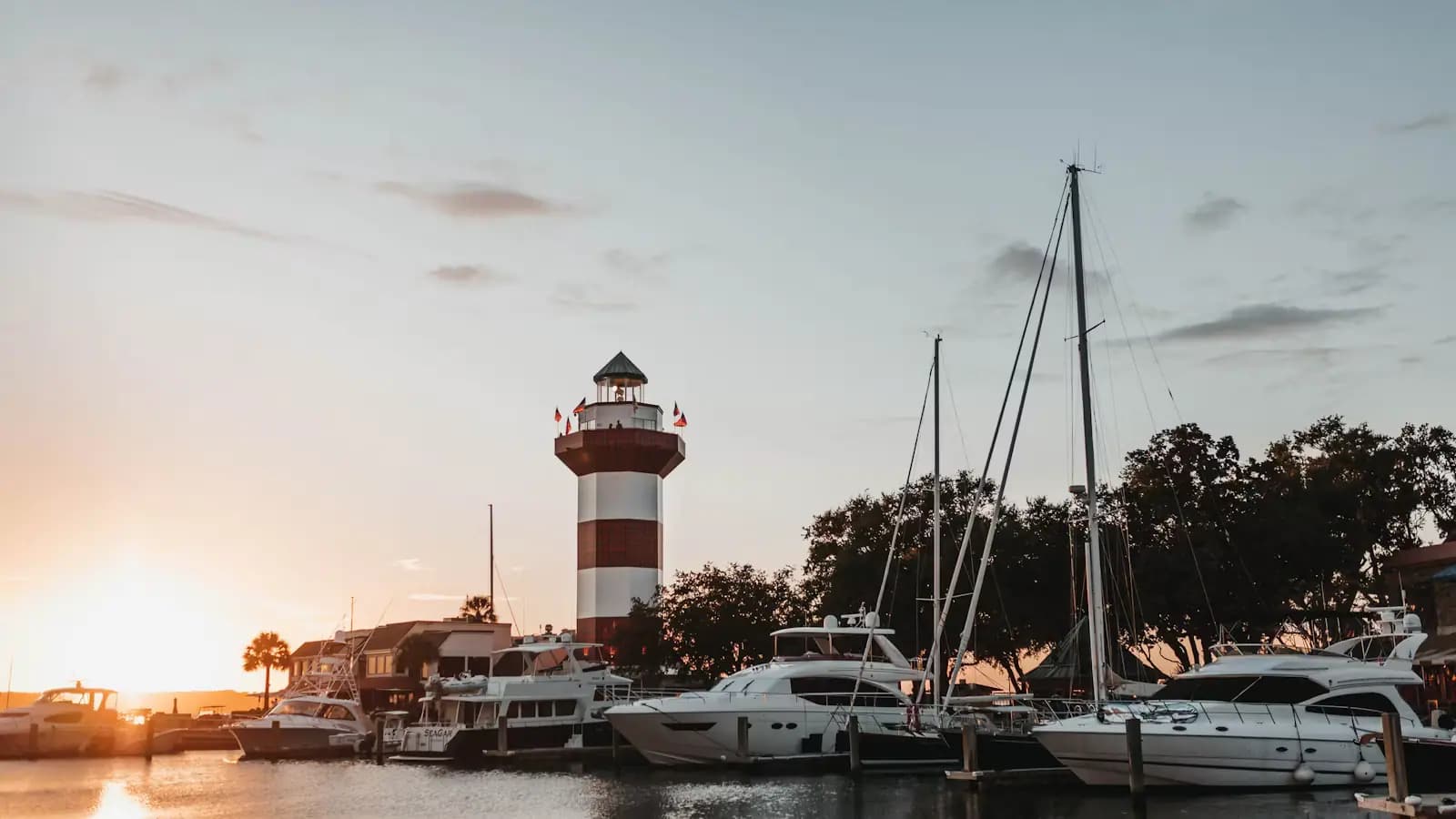
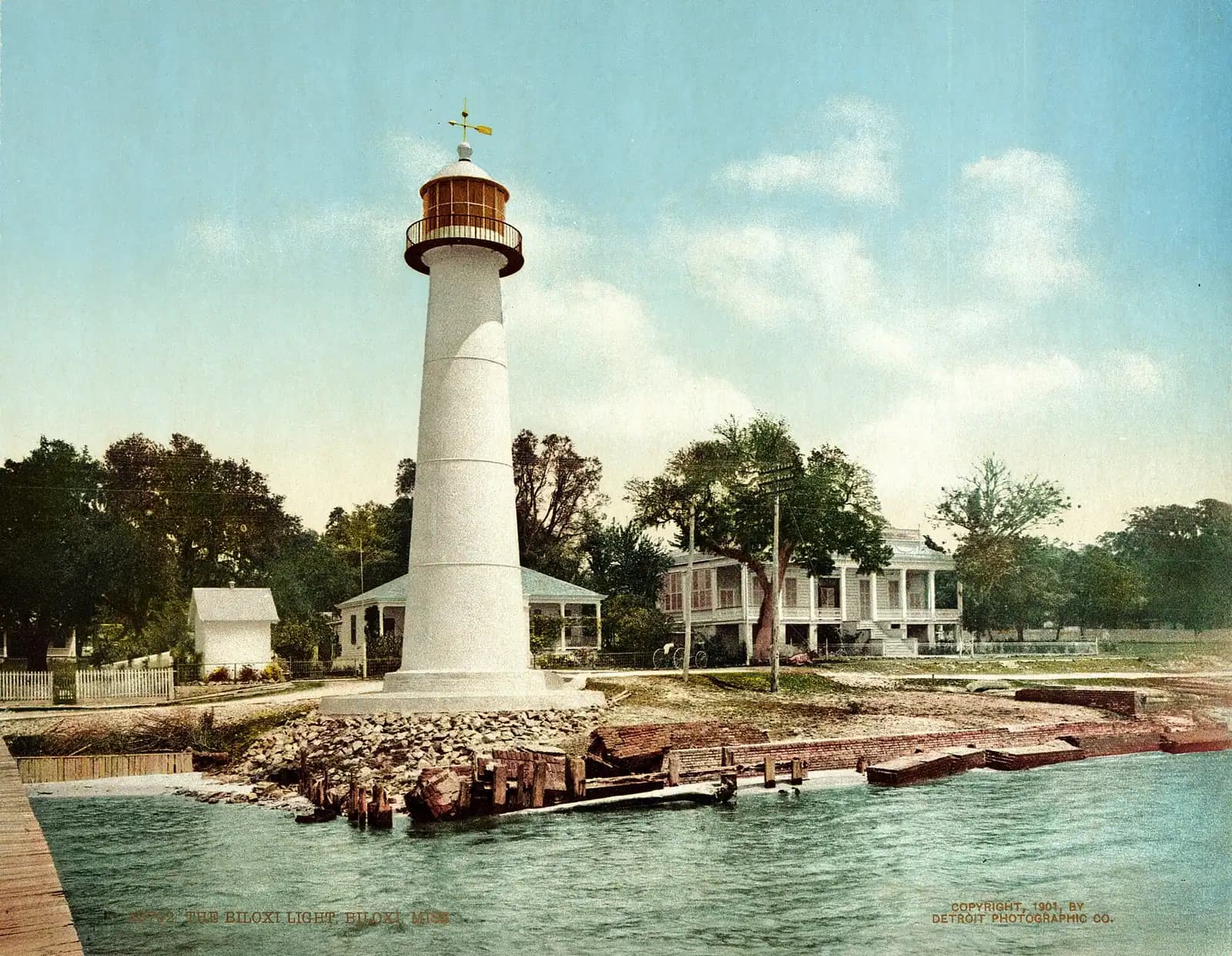
    Biloxi Lighthouse

    An 1848 cast-iron tower marooned in the median of a four-lane highway, kept for sixty-three years by one family of women.

    0.5–1 hoursFree to see and photograph from the street or the beach. Climbing the tower carries a small fee when climbs are running.1 mi away

  • Entertainment

    A motion-blurred casino floor with rows of lit slot machines
    Free

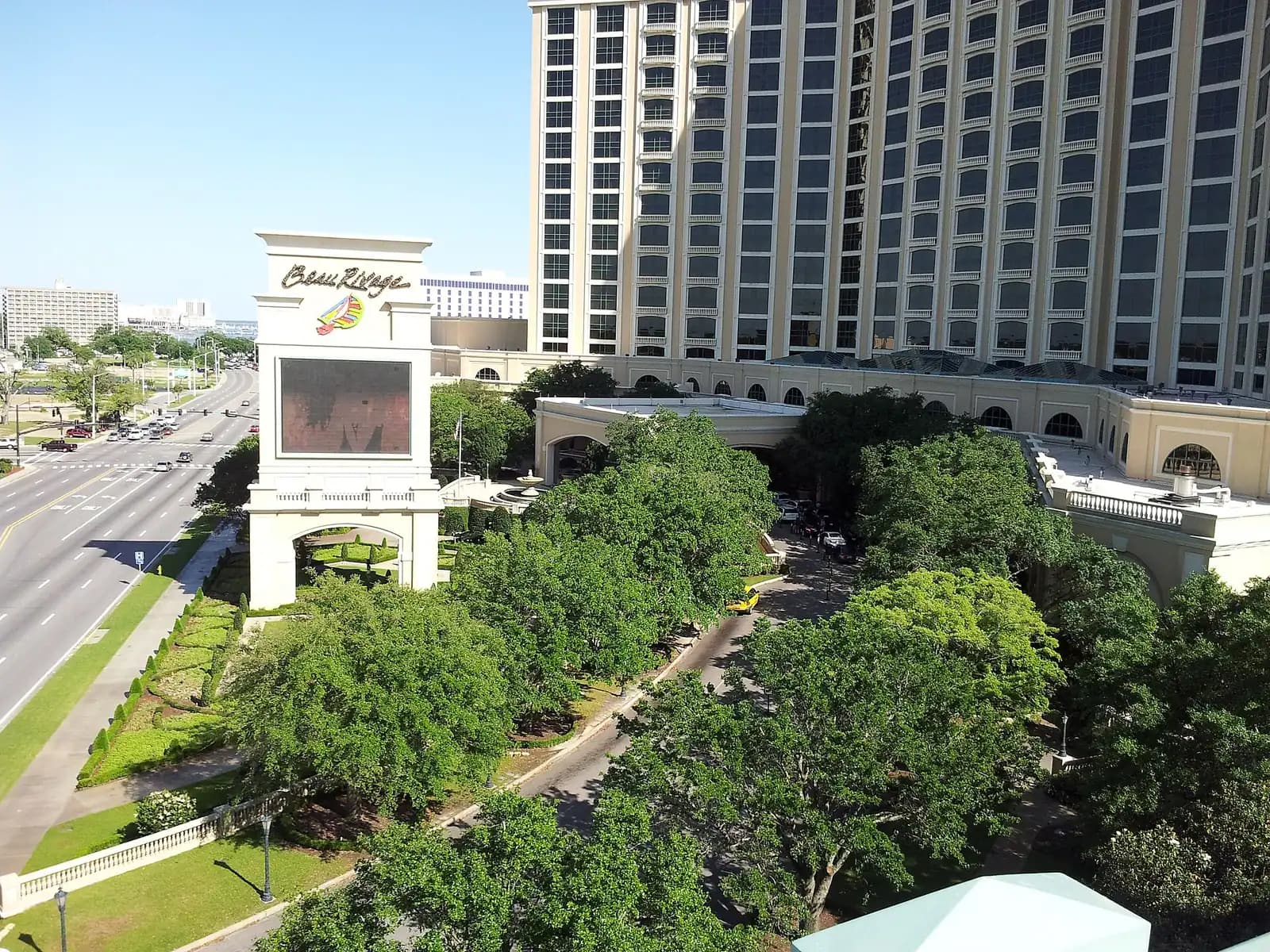
    Beau Rivage Resort & Casino

    The resort that brought Las Vegas building to Mississippi in 1999, and reopened exactly one year after Katrina closed it.

    1–5 hoursNo admission charge to enter the resort or walk the public areas. Rooms, dining, the spa and theatre tickets are all priced separately.0.6 mi away

  • Beach

    Low evening sun over a wide empty beach with wet sand reflecting the sky
    Free

    Biloxi Beach

    Miles of public sand along the beach highway, free to use, shallow a long way out, and with no shade anywhere on it.

    1–4 hoursFree. The sand is public along its whole length and parking along the frontage is free in most places.0.4 mi away

  • Historic site

    Spanish moss hanging in curtains from the spreading limbs of a live oak
    Free

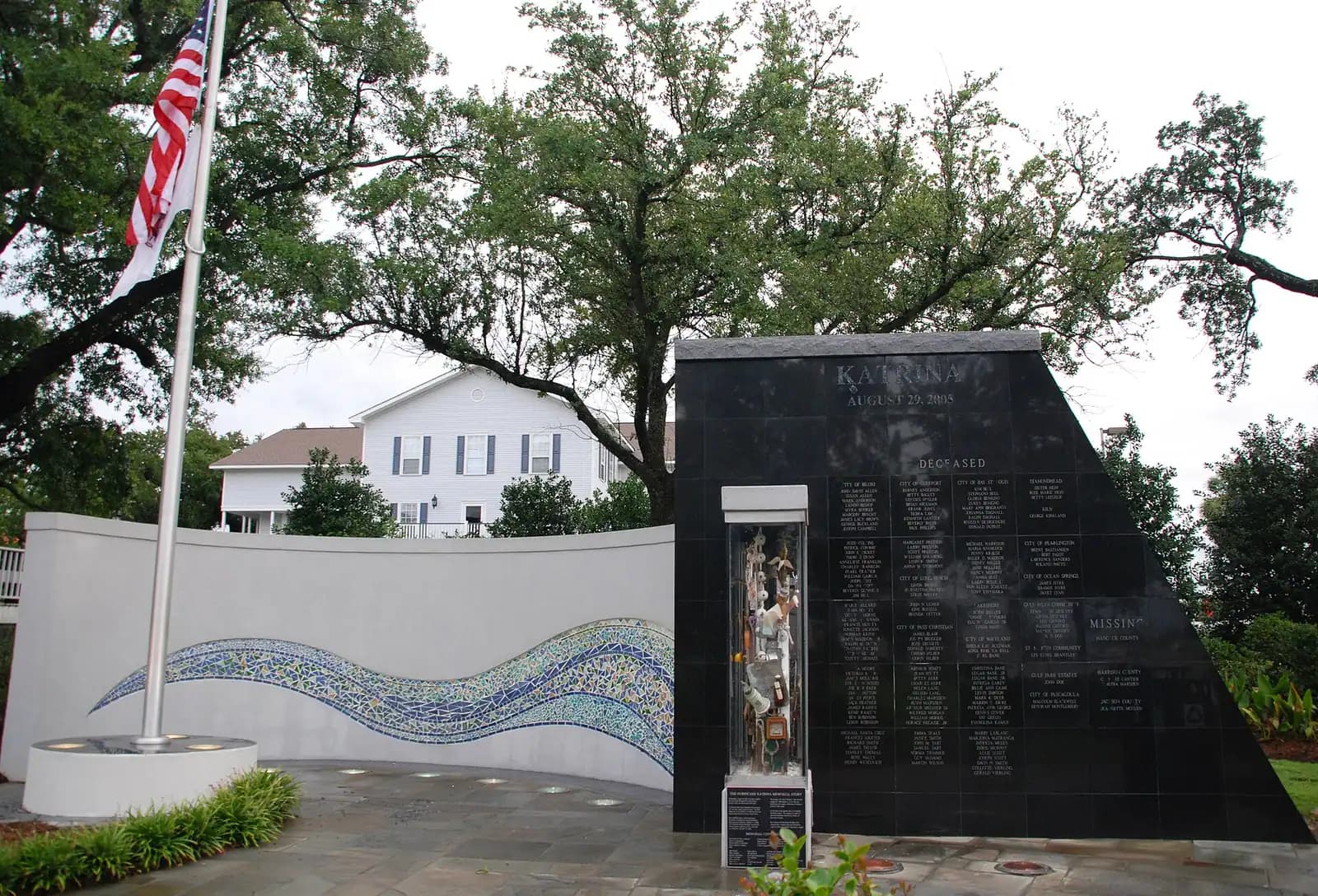
    Katrina Memorial

    A monument on the Town Green carrying the names of people who died in this city on 29 August 2005.

    15–30 minutesFree. There is no ticket and no attendant.0.2 mi away

Ohr-O'Keefe: common questions

Who was the Mad Potter of Biloxi?

George E. Ohr, born in Biloxi in 1857 and died in New Orleans in 1918. He made pottery with walls as thin as a teacup, sides pinched and crumpled while the clay was still wet, and glazes nobody else was using, then failed to sell much of it in his lifetime. He named himself the Mad Potter, grew a spectacular moustache and told everyone he was the greatest potter alive. A century later, the market agrees with him.

Did Frank Gehry design the Ohr-O'Keefe Museum?

Yes. Gehry designed a campus of several small curved buildings in metal and glass, laid out to fit between the mature live oaks on the site rather than clearing them — the arrangement was described at the time as pods dancing among the oaks. The metalwork was fabricated by Zahner of Kansas City. Walking the grounds between the buildings, under the trees, is a substantial part of what you come for.

Was the Ohr-O'Keefe Museum damaged by Hurricane Katrina?

Badly, and before it had ever opened. Construction began in 2004, and on 29 August 2005 the storm surge carried a casino barge off the water and dropped it onto the part-built campus. The project was rebuilt and opened in stages years later: three buildings on the eastern side in November 2010, and the City of Biloxi Center for Ceramics in September 2012. The original Pleasant Reed house on the site did not survive.

How long do you need at the Ohr-O'Keefe Museum?

Ninety minutes to two hours covers it comfortably, including time outside walking between the buildings. The galleries are modest in scale, which suits the work — Ohr's pots are small objects that reward standing still and looking at wall thickness rather than sweeping past. Add time if there is a changing exhibition on, or if you want to sit under the oaks, which plenty of visitors do.

Can you take a pottery class at the Ohr-O'Keefe Museum?

Yes. The City of Biloxi Center for Ceramics on the campus is a working studio with wheels and kilns, and it runs classes and workshops for adults and children. It is the one part of the site you cannot simply walk into: schedules change, places are limited and sessions book out, so arrange it before you travel rather than asking at the desk. Fees are separate from museum admission.