Skip to content
Search
Menu

We earn a commission if you book through this link. You pay the same price.

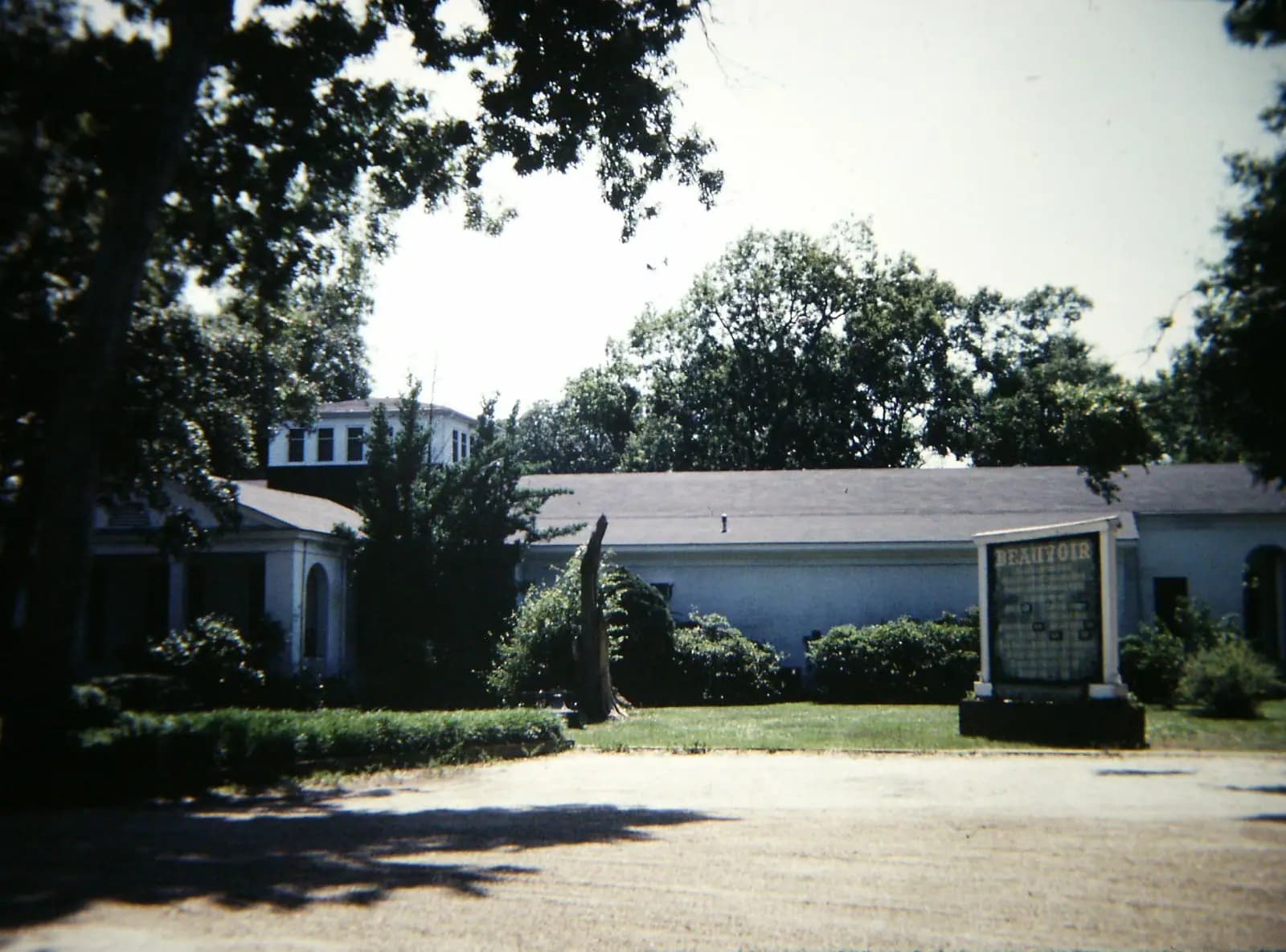
A wooden house with wide verandahs shaded by mature trees
Gary Todd from Xinzheng, China

Historic site

Beauvoir

Last updated

The beachfront house where Jefferson Davis spent his last twelve years, now a museum, a cemetery and a privately run presidential library.

Beauvoir is a raised, galleried house on the Biloxi beachfront, built for a planter named James Brown between 1848 and about 1852 and designed for the climate rather than for show: a broad front gallery facing the Mississippi Sound, high ceilings, and the whole structure lifted off the ground to let the air and the water through.

Its significance is what happened to it later. Samuel Dorsey bought the property in 1873. After his death his widow, the writer Sarah Dorsey, invited Jefferson Davis — who had been president of the Confederate States, had been imprisoned after the war, and was by then in serious financial difficulty — to stay and write. He moved into a cottage on the grounds in 1877 and worked there on "The Rise and Fall of the Confederate Government", published in 1881. He lived at Beauvoir until his death in December 1889.

In 1902 his widow Varina sold the property to the Mississippi Division of the Sons of Confederate Veterans for use as a home for Confederate veterans. Roughly 2,500 veterans, wives and widows lived on the site between 1903 and 1957, and a cemetery on the grounds holds their graves along with a Tomb of the Unknown Confederate Soldier. The Jefferson Davis Presidential Library and Museum, which opened in 1998, holds Davis's personal library, papers and biographical exhibits.

The site is a National Historic Landmark, and it is still owned and operated by the Sons of Confederate Veterans. That matters to a visitor, because how Confederate memorial sites should be presented is an active and unsettled argument in the United States, and Mississippi has been near the centre of it — the state retired its Confederate-emblem flag in 2020. The interpretation you will hear at Beauvoir is the interpretation of the organisation that owns it. Knowing that before you arrive is the difference between visiting a historic site and being handed a version of one.

Getting there and parking

Beauvoir stands on the north side of US 90 at the western end of Biloxi's beachfront, roughly ten minutes' drive west of the Biloxi Lighthouse and a few minutes short of the Gulfport city line. The entrance is signed from the beach road and there is parking on site.

Coming from the casino district at the eastern end of the peninsula, allow twenty minutes and rather more on a Friday evening, when US 90 slows across the whole of Biloxi.

If you are arriving at Gulfport-Biloxi International Airport it is a straightforward run south to the beach road and then east, about fifteen minutes. The coast transit route along US 90 passes the site, but services are infrequent enough that a car or a taxi is the realistic option.

What is actually on the site

The main house is the centrepiece: a one-storey raised cottage in the Gulf Coast idiom, with a deep front gallery looking south across US 90 to the water, furnished as a period interior. Guided tours of the house are the usual way in.

The grounds run back from the beachfront under live oaks, and the walk between buildings is the part most visitors underestimate in July. The Library Pavilion associated with Davis's writing years stands among them.

The cemetery is at the rear of the property. It holds the graves of veterans and family members from the home's half-century as a residence, along with a Tomb of the Unknown Confederate Soldier.

The Jefferson Davis Presidential Library and Museum, opened in 1998, is the indoor exhibit space: Davis's own library and papers, personal effects, and displays covering his life before, during and after the Confederacy. It is privately operated. Despite the name it is not one of the federal presidential libraries run by the National Archives, a system that begins with Herbert Hoover, and nothing here is federally administered.

Contested ground, stated plainly

Confederate memorial sites in the United States are interpreted very differently depending on who is doing the interpreting, and there is no neutral version available. Beauvoir is owned and run by the Mississippi Division of the Sons of Confederate Veterans, a heritage organisation with a stated position on the war and its causes, and the on-site presentation reflects that position.

Mainstream historical scholarship holds that the secession of the Southern states, including Mississippi, was driven principally by the preservation of slavery; Mississippi's own 1861 declaration of secession says so in its opening lines. Visitors who expect that framing at every stop should be aware that they may not encounter it here.

This is not an argument for skipping it. The house is genuinely old, the collection is real, the veterans' home is a documented chapter of this coast's social history, and standing in the building where Davis wrote his memoir is a legitimate reason to come. It is an argument for knowing who is speaking. If you want the wider history — slavery on the Gulf Coast, Reconstruction, the long politics of Confederate memorialisation — bring it with you or read it afterwards.

Mississippi voters approved a new state flag without the Confederate battle emblem in November 2020. The argument is not settled here, and pretending otherwise would not help anybody planning a visit.
What the storm did to it

Beauvoir sits directly on the beachfront, which in 2005 put it in the worst possible place. Hurricane Katrina's surge destroyed five of the seven buildings on the property on 29 August. The main house survived, badly damaged, largely because it had been built raised and because its structure was sound enough to take the water.

Restoration of the house took nearly three years, and it reopened to the public on 3 June 2008. The library reopened later, after separate work on the collections and the building; published accounts differ on the date, so treat any single figure with caution.

Standing on the front gallery, the thing to understand is that everything between you and the water — the beach road, the sand, the seawall — was over-topped and that the buildings that are gone from this lawn were removed by the sea rather than by a decision. That is the same fact you will meet at every stop on this coast, and it is more legible here than at most of them.

Planning the visit

  • Beauvoir is at the western end of the Biloxi beachfront on US 90, about ten minutes from the lighthouse and a similar distance from the Gulfport line. It has its own parking on site.
  • House tours are guided and run to a schedule; the grounds, cemetery and library are self-paced. Between ninety minutes and two hours covers all of it comfortably.
  • Admission is charged, and house and library tickets have at times been sold separately or as a combination. Prices and tour times change, so check before you drive out rather than relying on anything printed.
  • Most of the walking is outdoors on open ground and gravel with limited shade between buildings. From June to September, go early; by two in the afternoon this is a hot, exposed site and a thunderstorm is a live possibility.
  • The site hosts commemorative events through the year that are aimed at a particular constituency rather than at general visitors. If that is not what you came for, check the calendar and pick a different day.

Near Beauvoir

Straight-line distances, so allow more on the road — the island is long and has one main parkway.

  • Beach

    Low evening sun over a wide empty beach with wet sand reflecting the sky
    Free

    Biloxi Beach

    Miles of public sand along the beach highway, free to use, shallow a long way out, and with no shade anywhere on it.

    1–4 hoursFree. The sand is public along its whole length and parking along the frontage is free in most places.4.6 mi away

  • Landmark

    A lighthouse rising above a low building at the water's edge
    Free

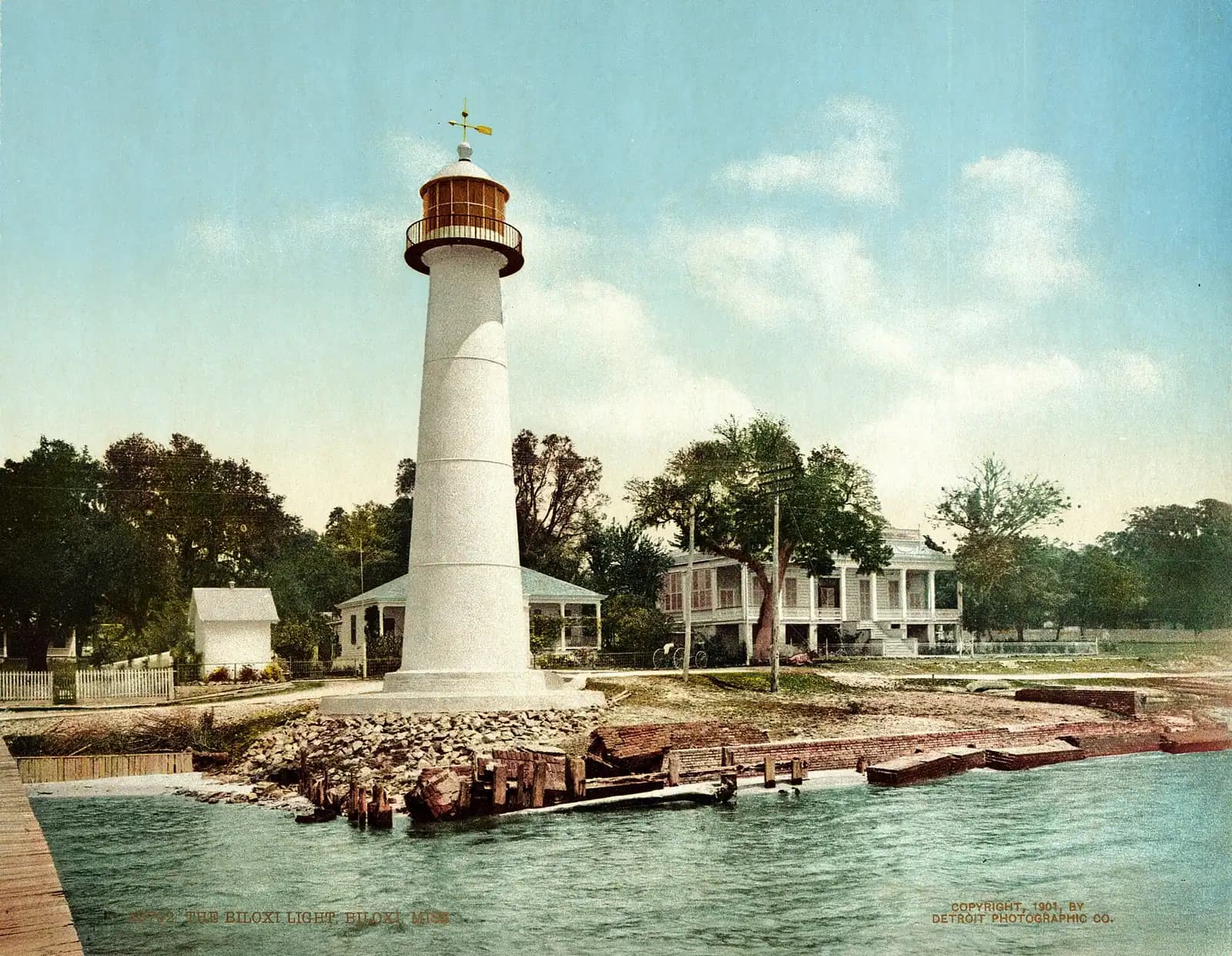
    Biloxi Lighthouse

    An 1848 cast-iron tower marooned in the median of a four-lane highway, kept for sixty-three years by one family of women.

    0.5–1 hoursFree to see and photograph from the street or the beach. Climbing the tower carries a small fee when climbs are running.4 mi away

  • Museum

    A potter's hands shaping wet clay on a spinning wheel

    Ohr-O'Keefe Museum of Art

    Frank Gehry's metal pods set among live oaks, built to hold the twisted, paper-thin pottery of a man who called himself mad.

    1.5–2.5 hoursA modest admission charge for adults with reduced rates for students, seniors and children. Walking the grounds between the buildings costs nothing.5 mi away

  • Neighbourhood

    Rows of boats moored in a marina basin on flat water at first light with a low skyline beyond
    Free

    Gulfport

    Mississippi's second city, twelve miles west along the beach road, holding the Ship Island ferry, the airport and the aquarium.

    1–5 hoursFree to visit. Jones Park and the harbour cost nothing; the ferry, the aquarium and the casinos do not.7.6 mi away

Beauvoir: common questions

What is Beauvoir in Biloxi?

It is a beachfront house built between 1848 and about 1852 that became the last home of Jefferson Davis, president of the Confederate States, who lived there from 1877 until his death in December 1889 and wrote his memoir on the property. Since 1902 it has been owned by the Mississippi Division of the Sons of Confederate Veterans, which ran it as a Confederate veterans home until 1957 and operates it today as a museum, cemetery and privately run presidential library.

Is the Jefferson Davis Presidential Library a real presidential library?

It is a genuine library and museum, opened in 1998, holding Davis's personal library, papers and biographical exhibits. It is not part of the federal presidential library system administered by the National Archives, which begins with Herbert Hoover and covers presidents of the United States. Beauvoir's library is privately owned and operated by the Sons of Confederate Veterans, and its interpretation reflects that ownership.

Was Beauvoir destroyed by Hurricane Katrina?

Five of the seven buildings on the property were destroyed by the storm surge on 29 August 2005. The main house survived with severe damage, helped by having been built raised off the ground, and reopened to the public on 3 June 2008 after nearly three years of restoration. The library reopened later. Sitting directly on the beachfront, the site took the full force of the surge.

Is Beauvoir worth visiting?

That depends on what you want from it. The house is a genuine mid-nineteenth-century Gulf Coast building, the collection is real, and the half-century the site spent as a veterans' home is a documented part of this coast's history. But the site is owned and interpreted by a Confederate heritage organisation, and how such places should be presented is actively contested in Mississippi and beyond. Go knowing who is telling the story.